


Bullock Bedside Table
£8,500
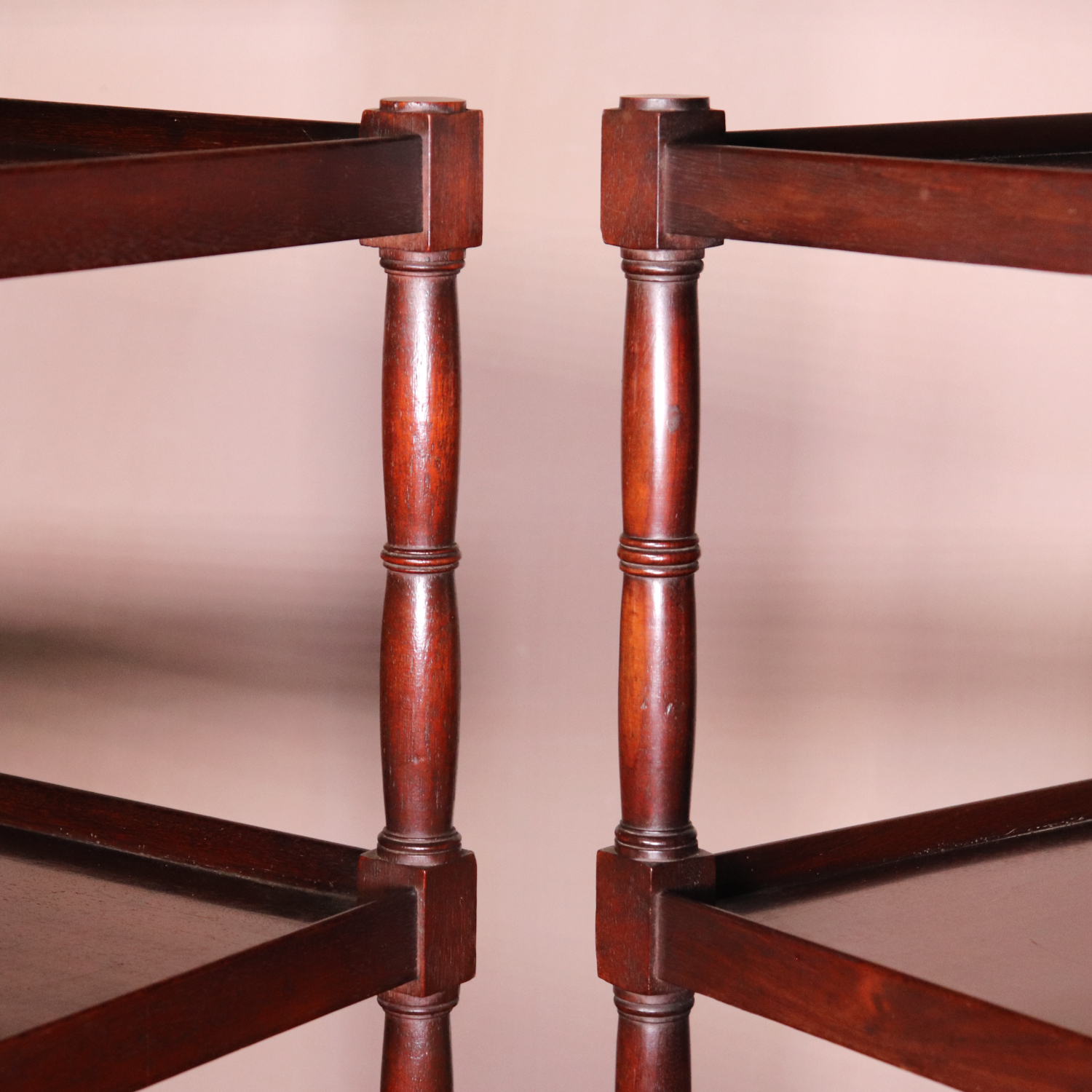
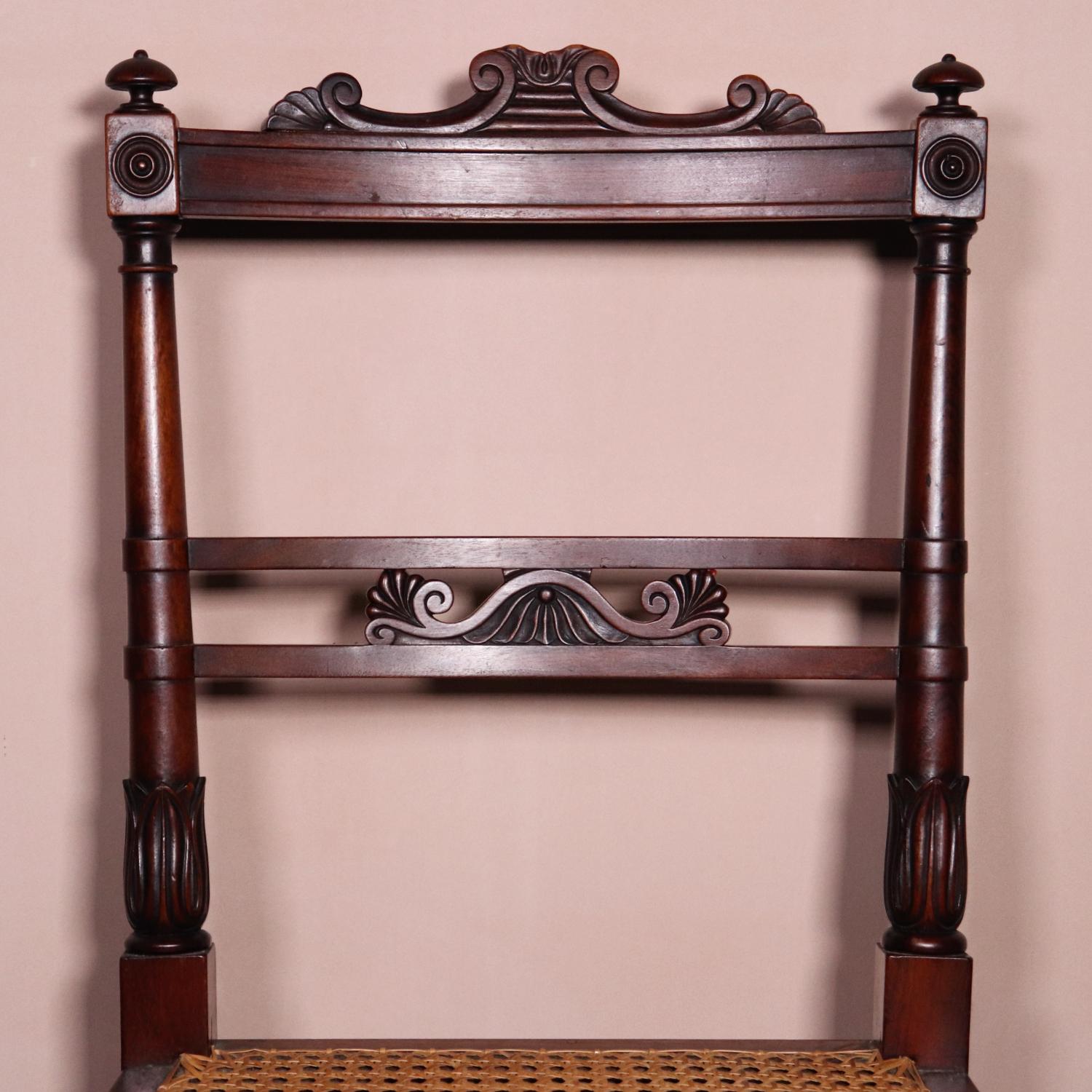
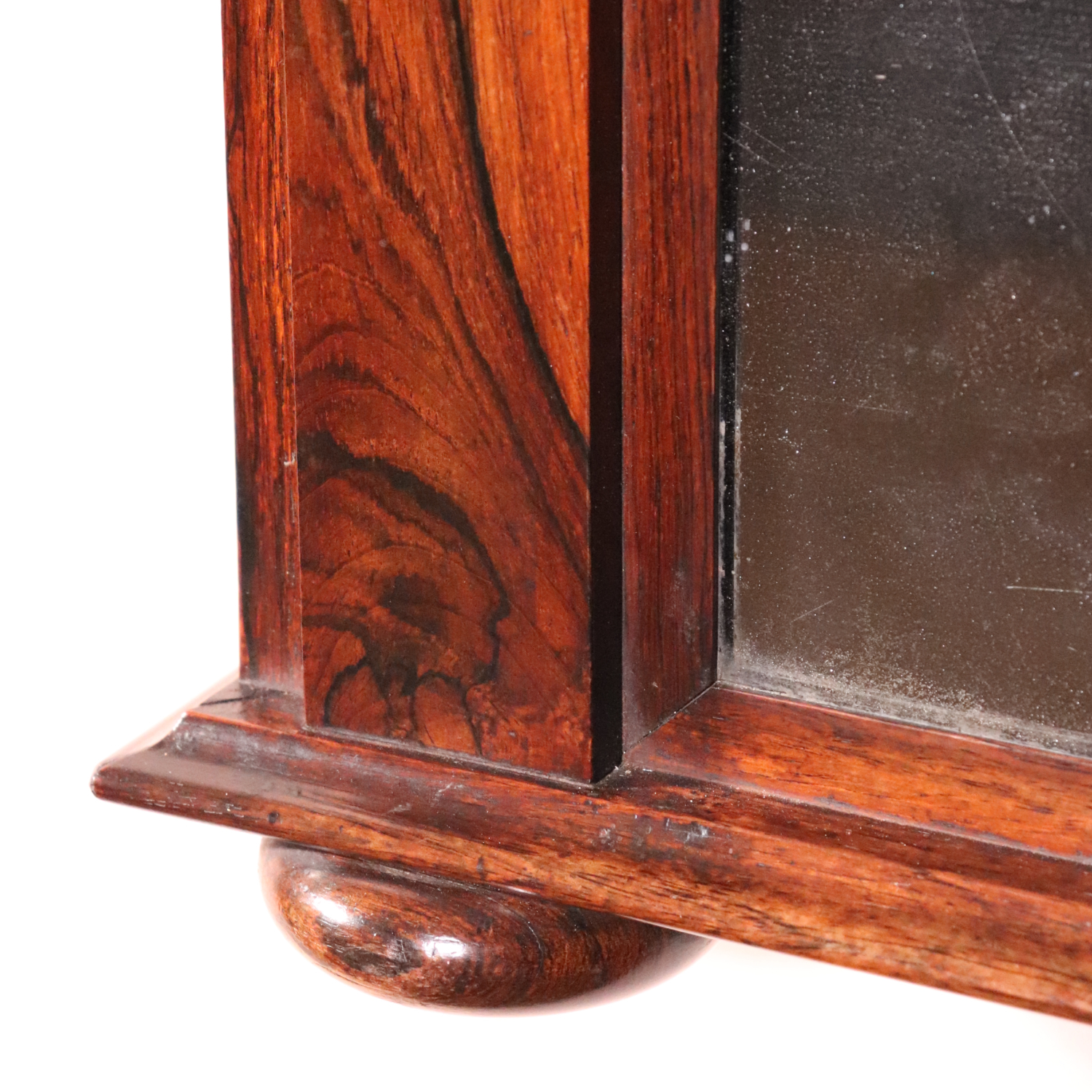
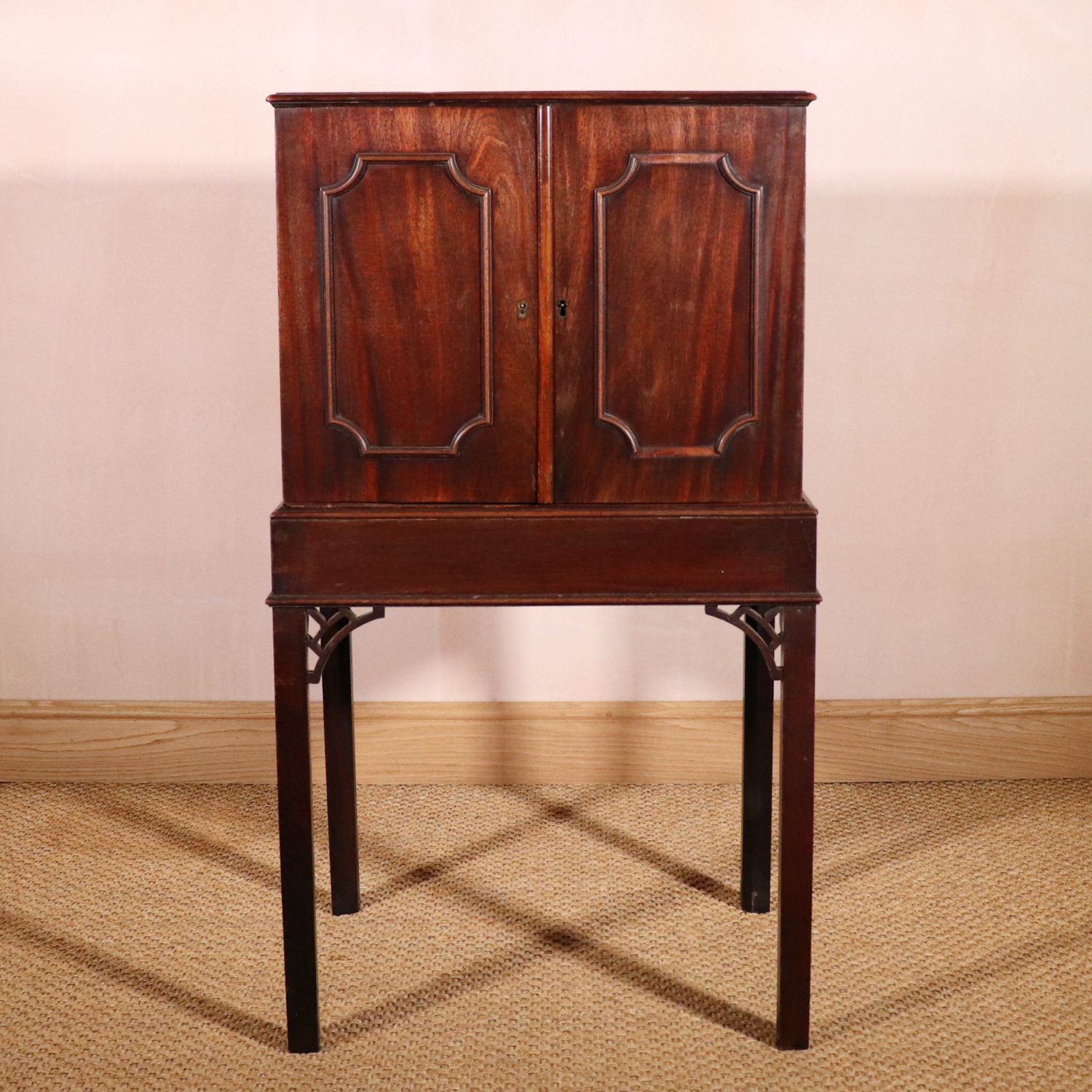
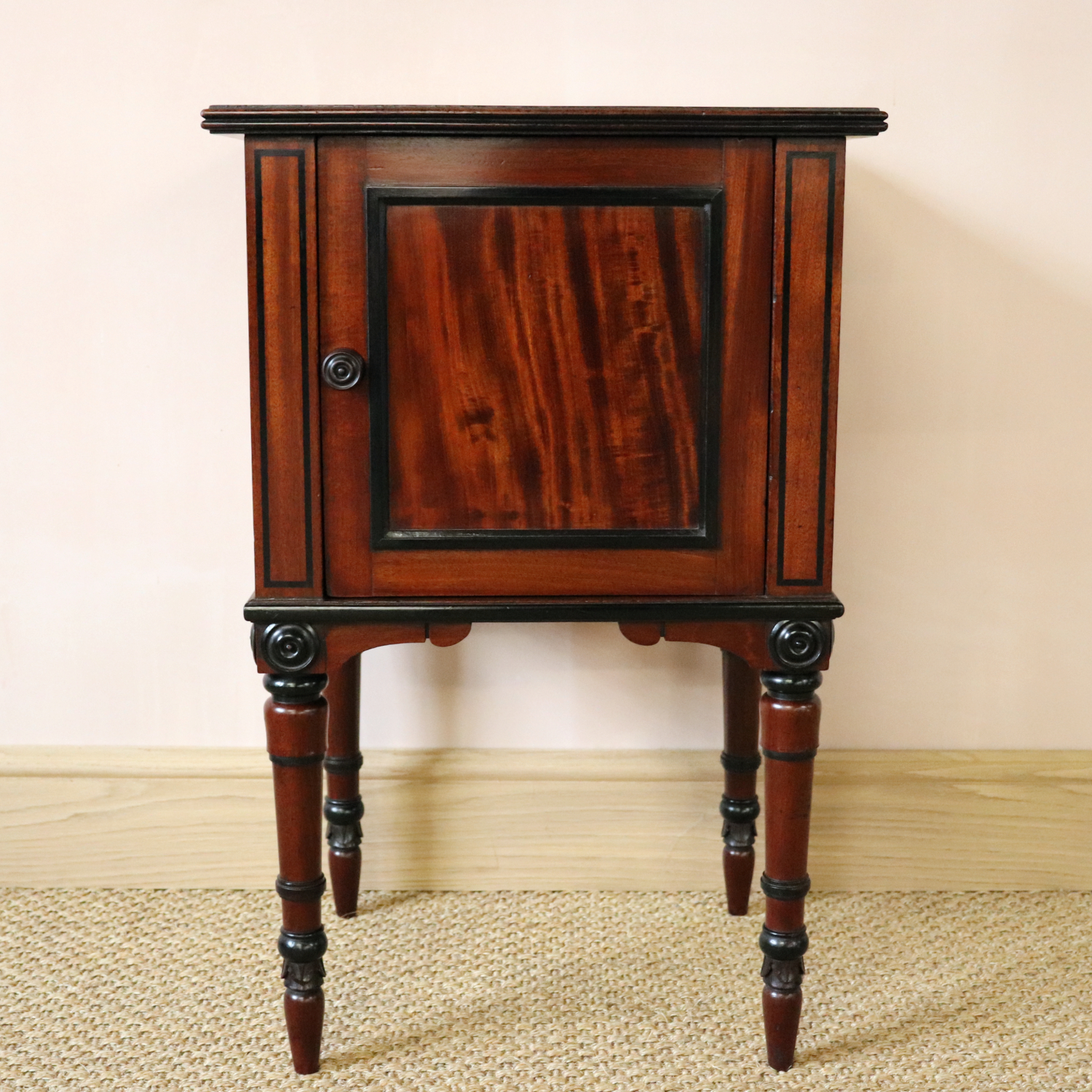
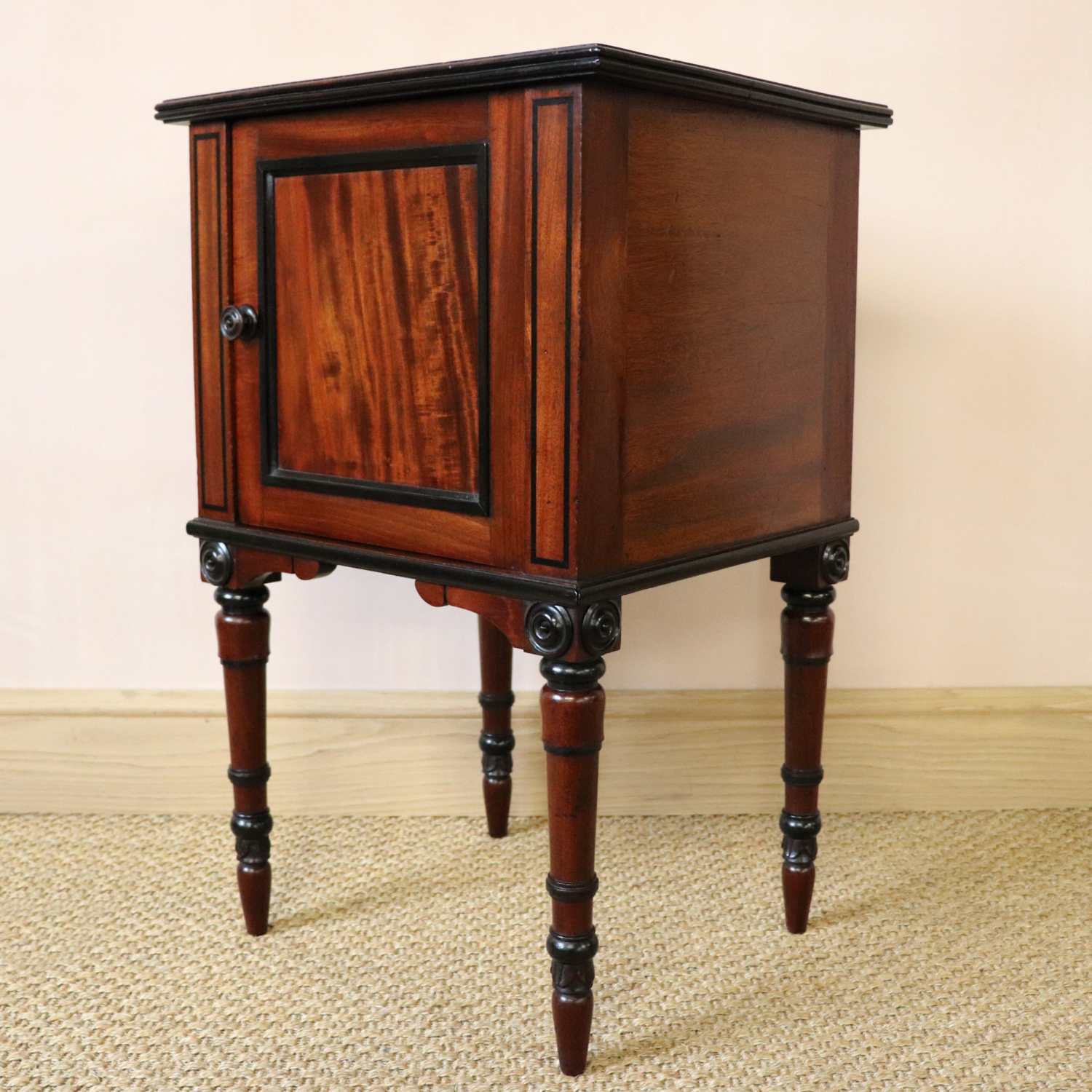
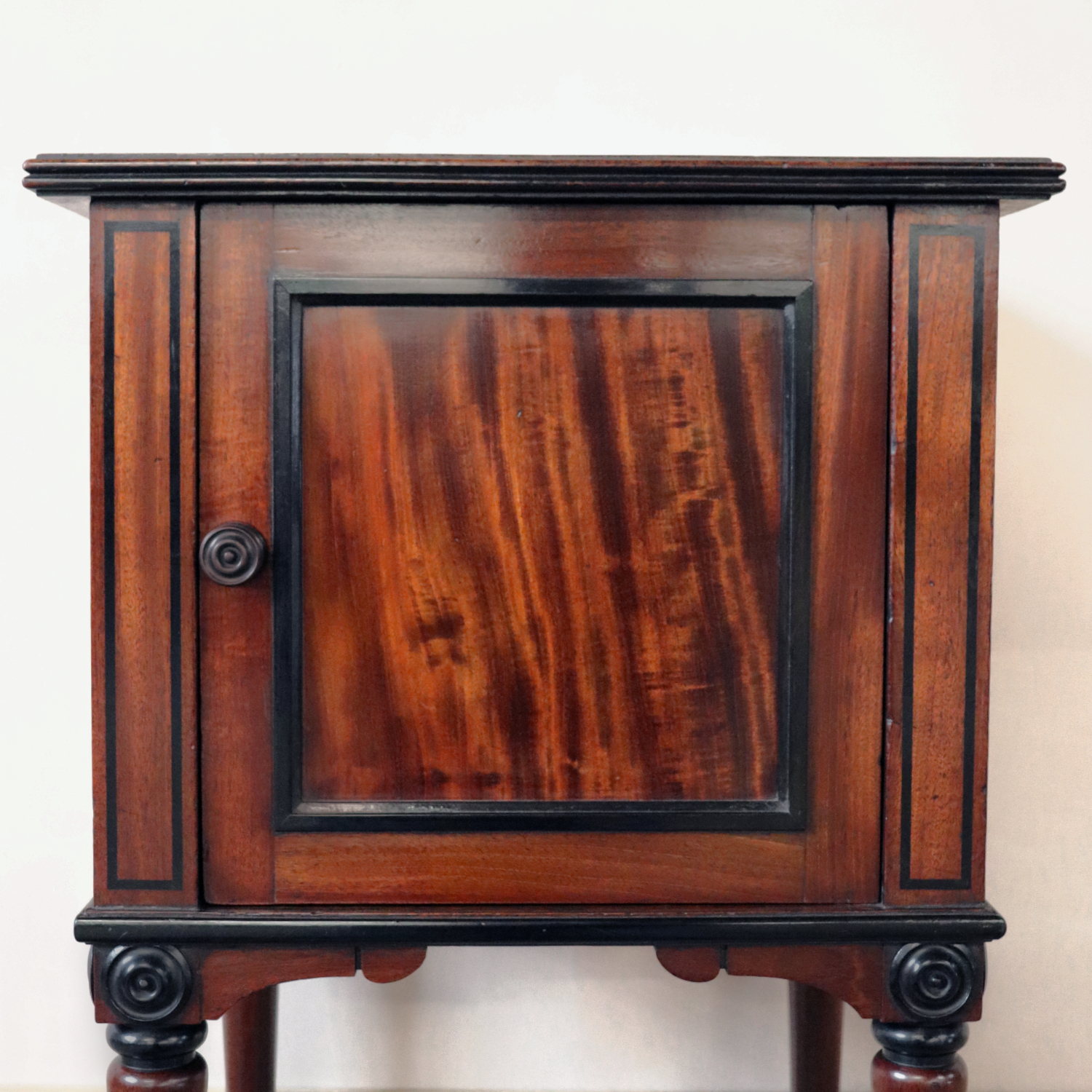
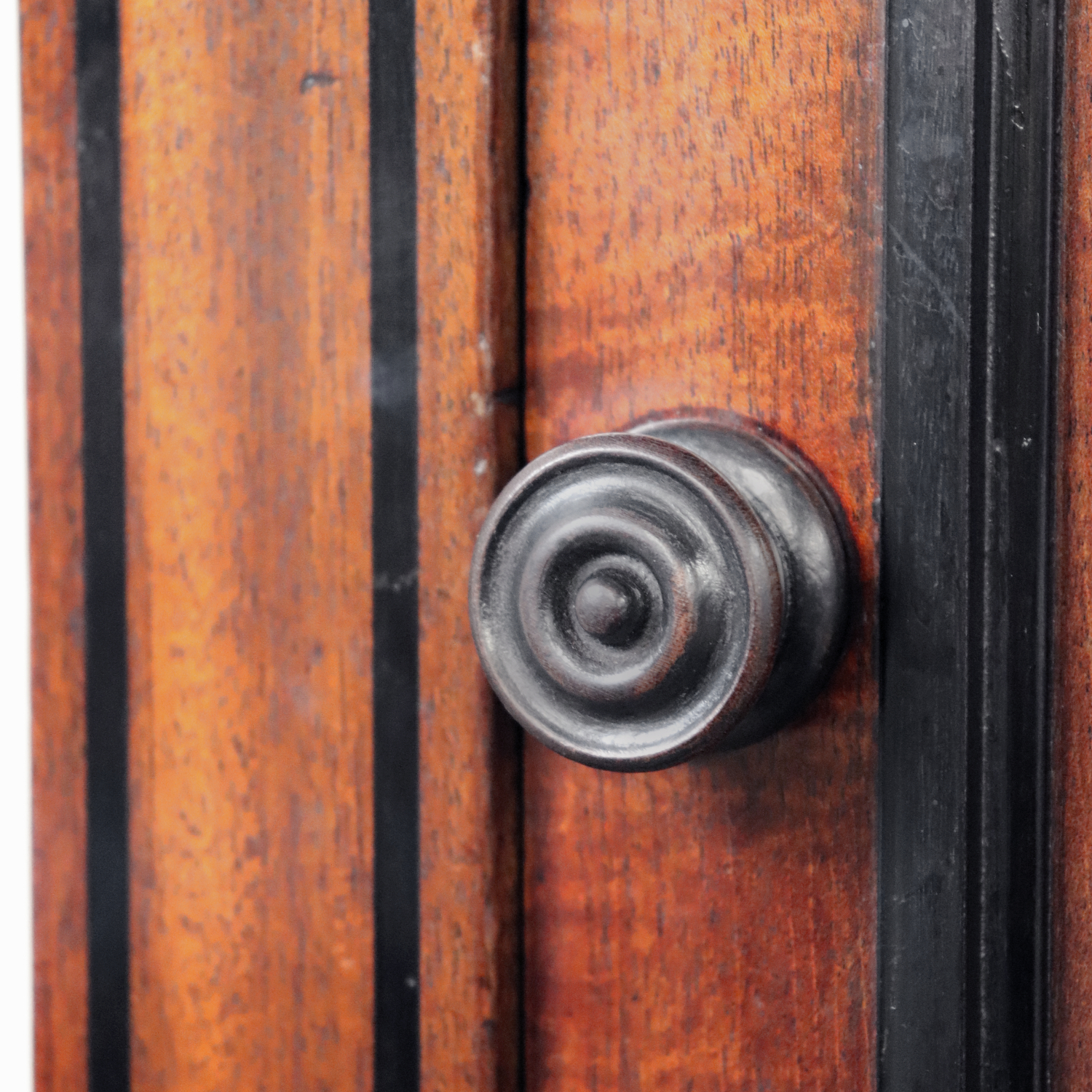
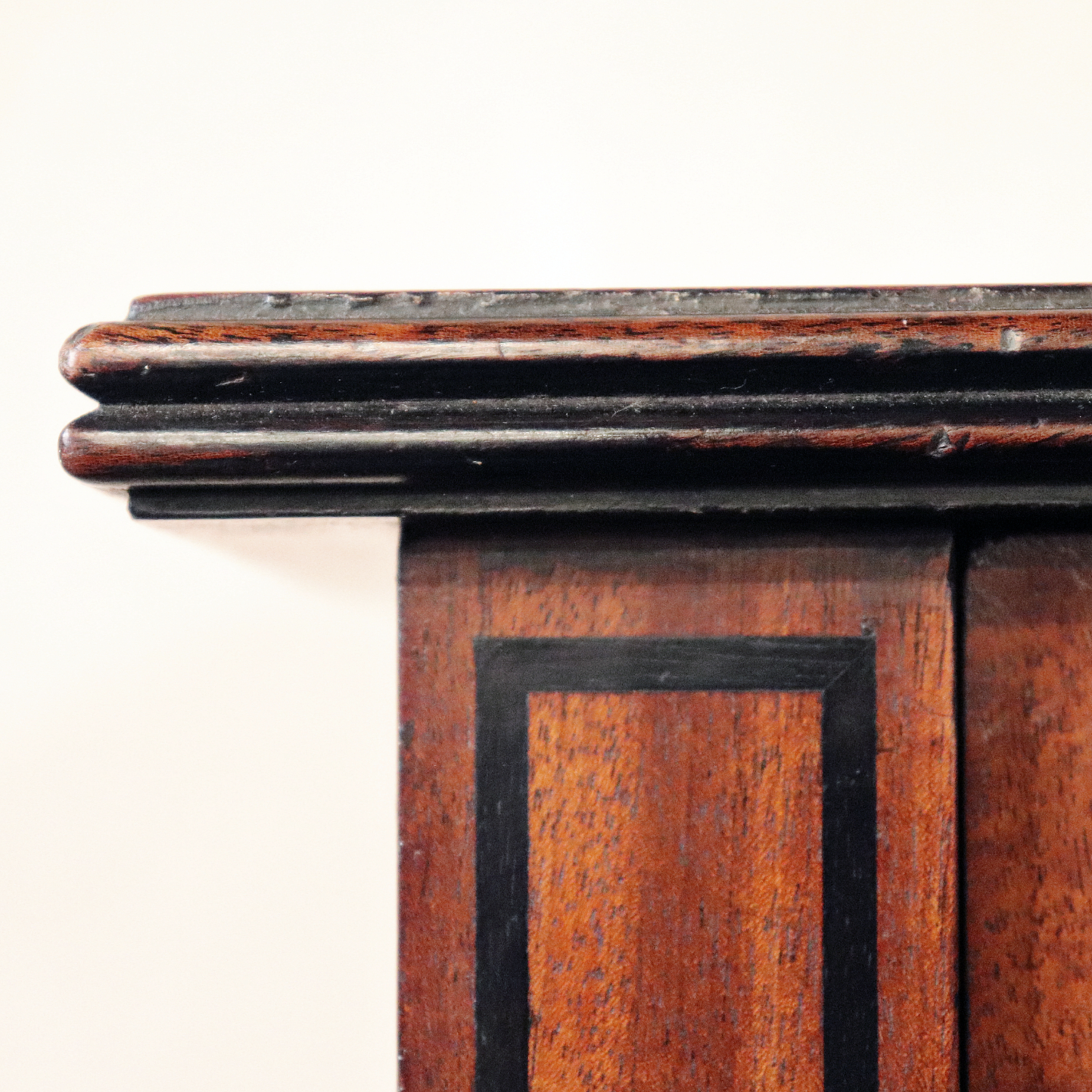
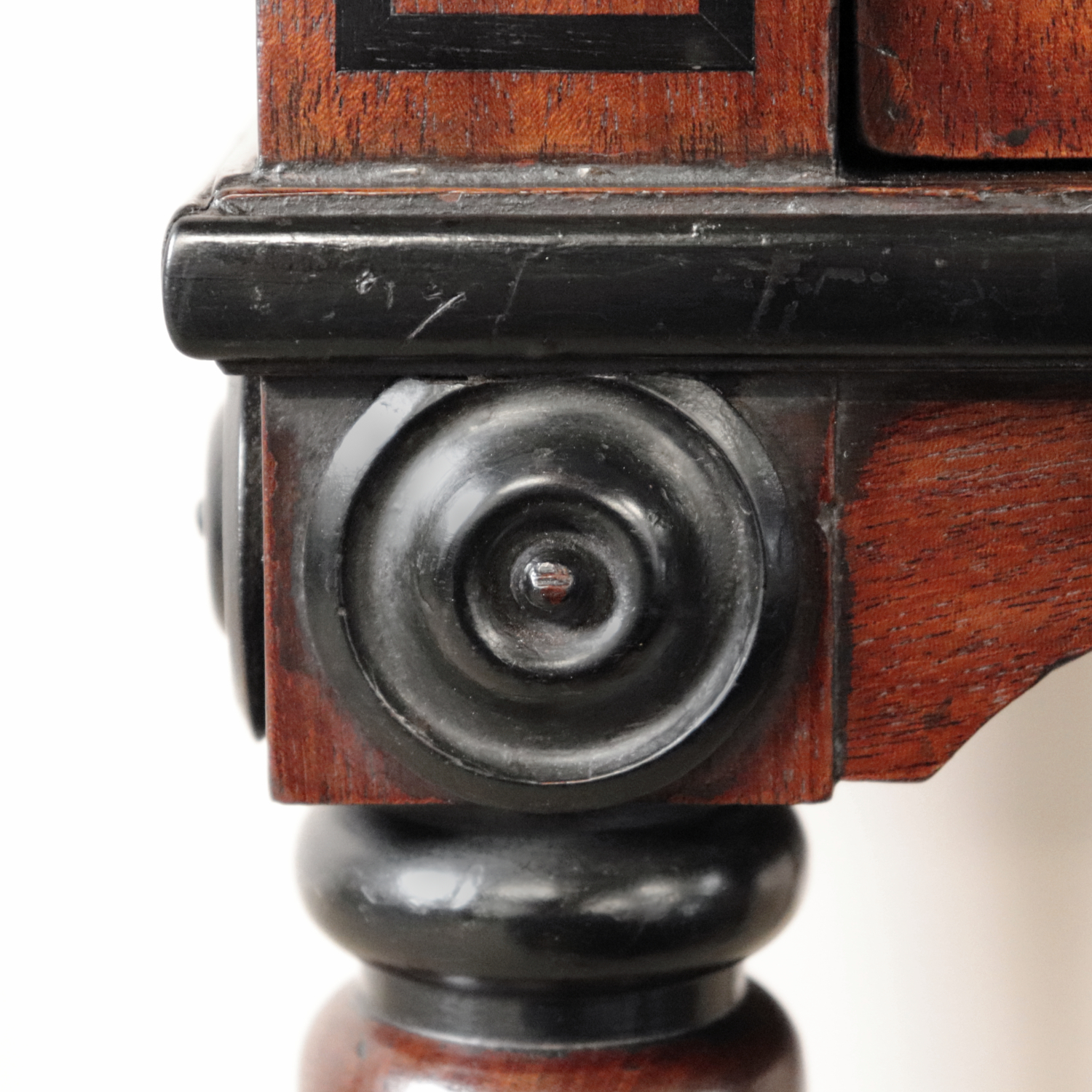
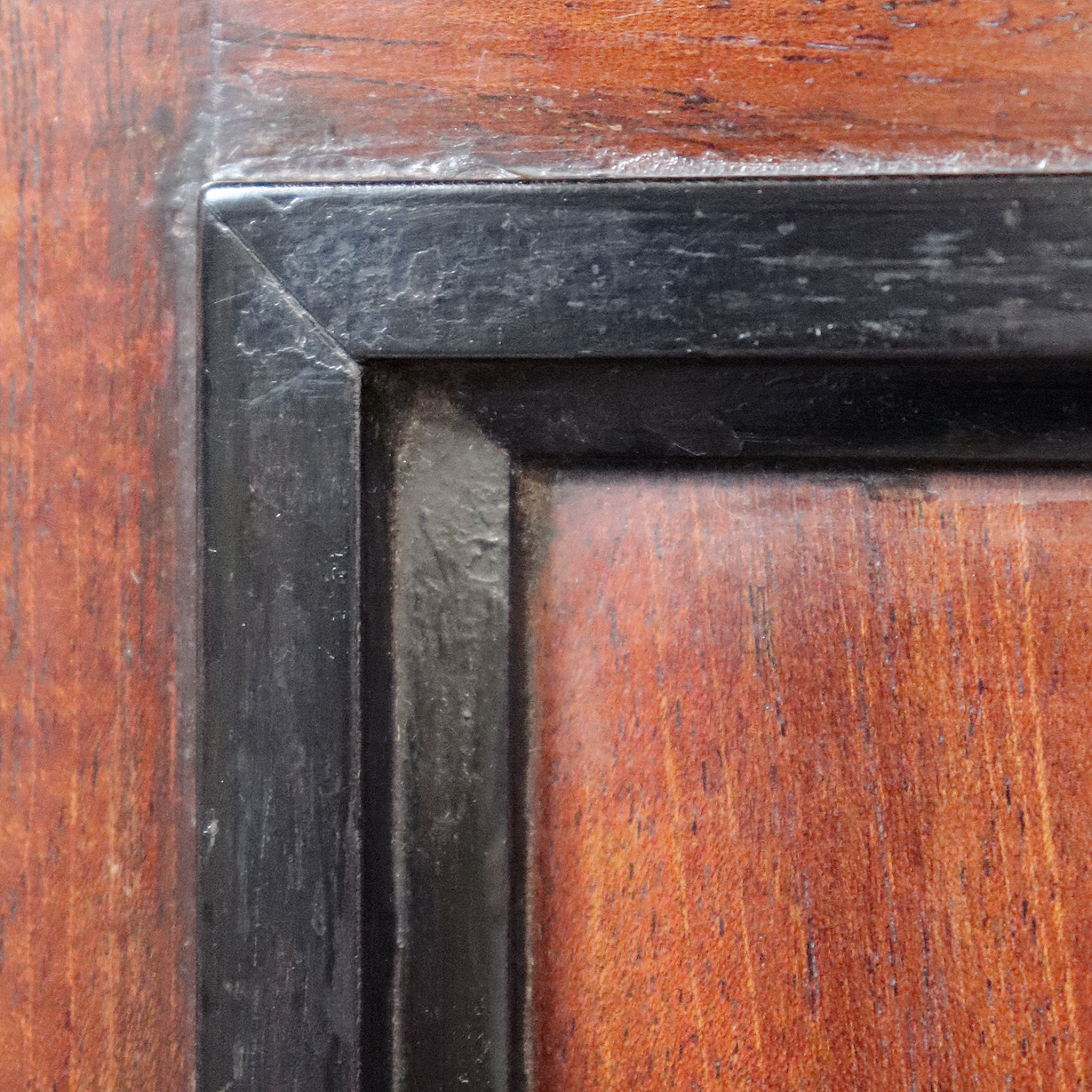
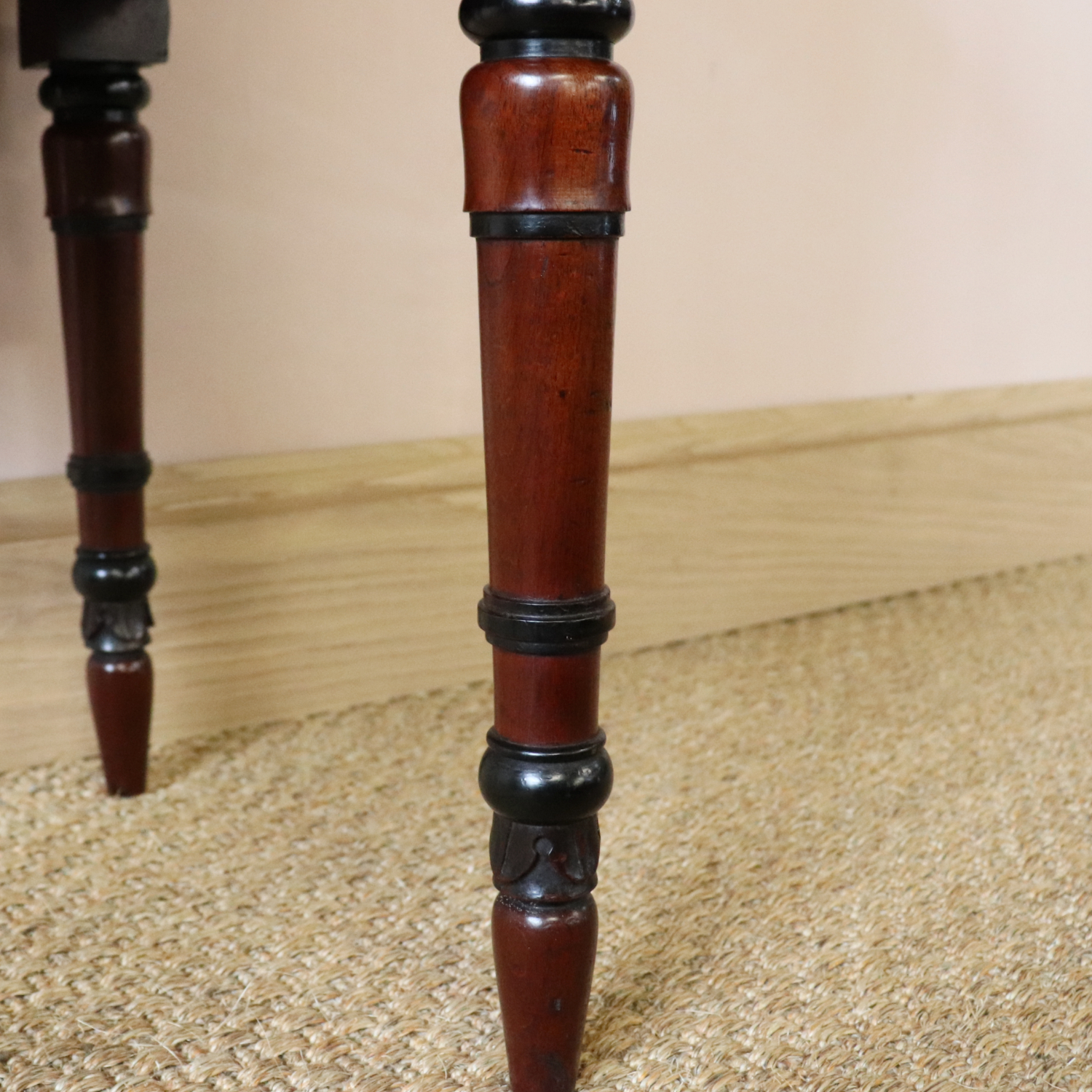
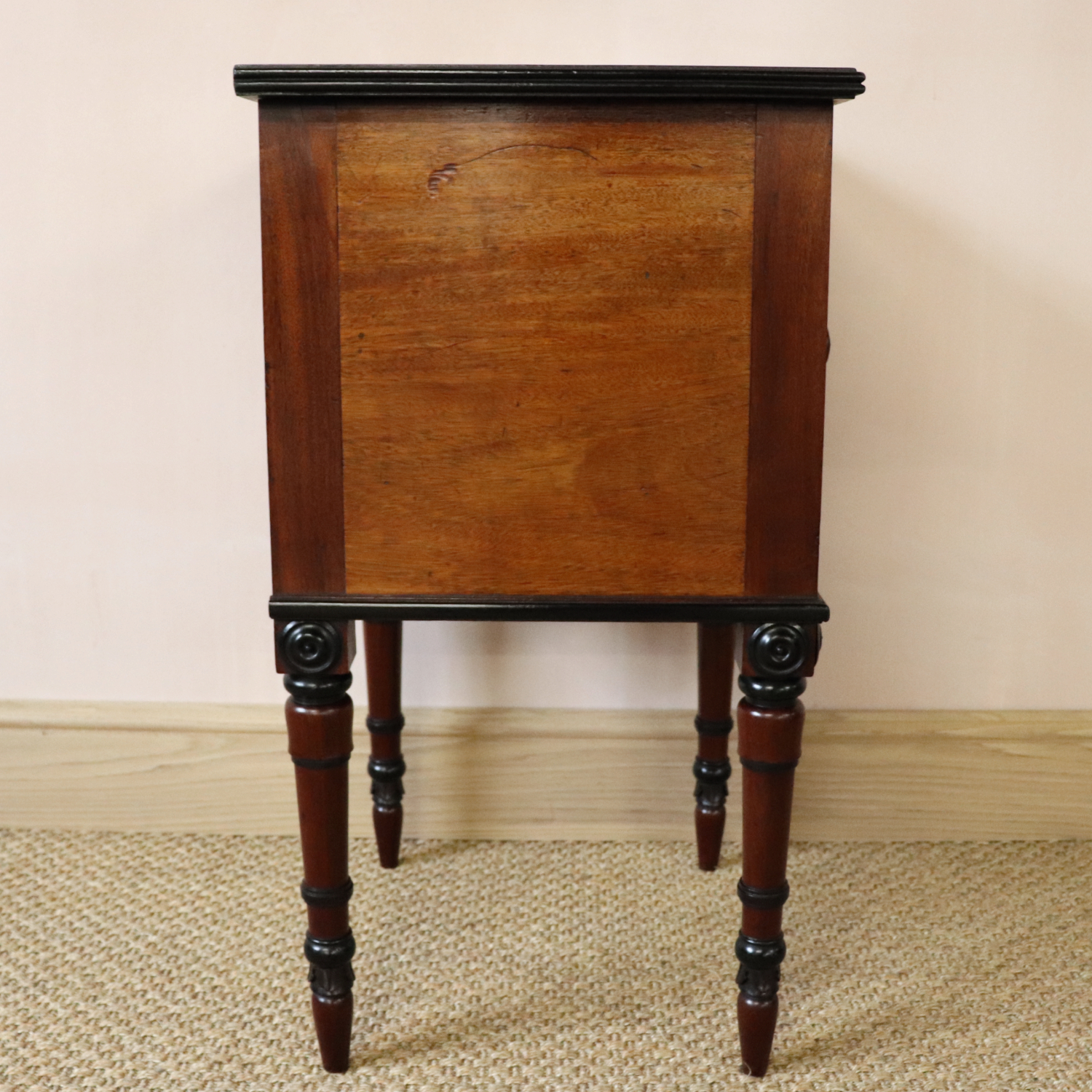
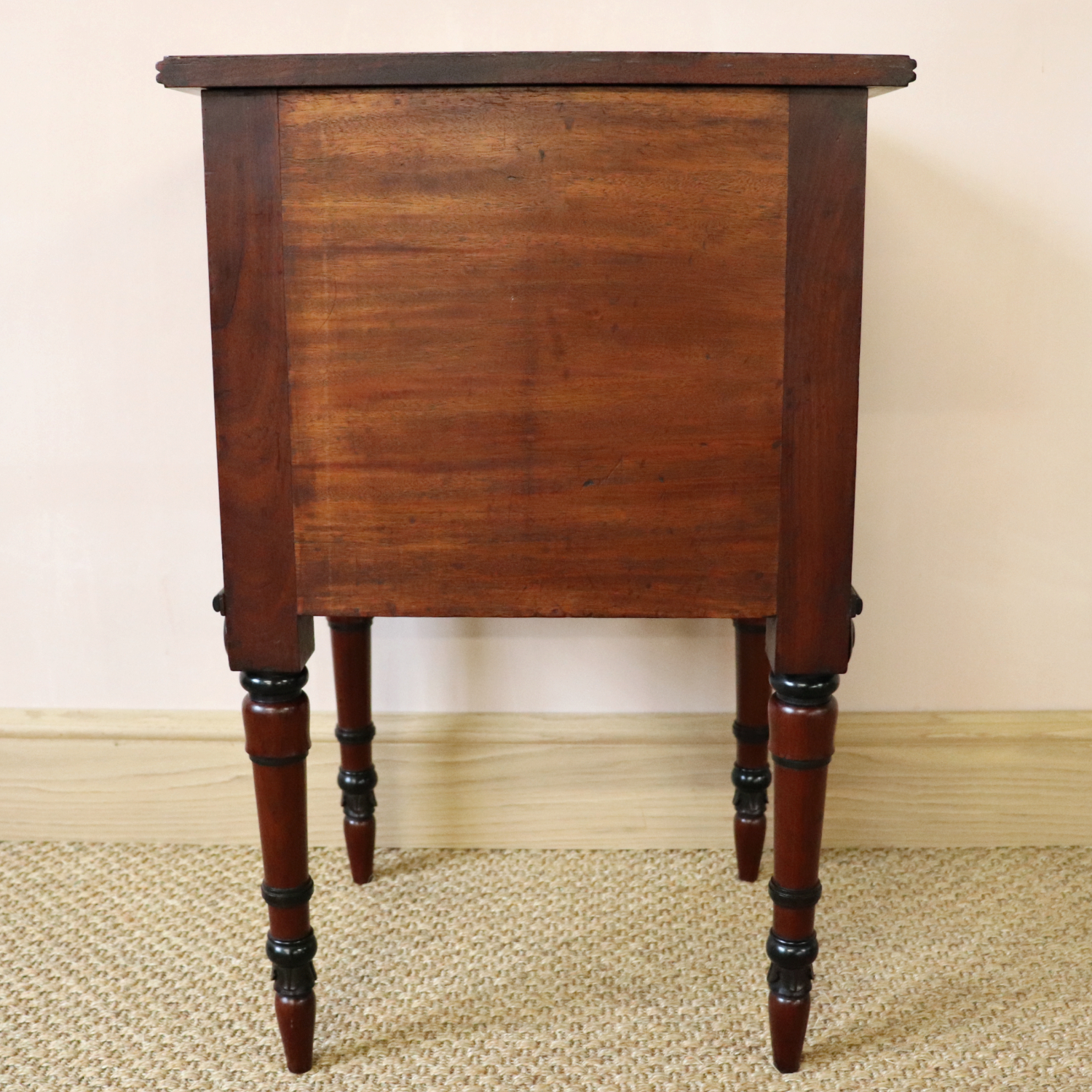
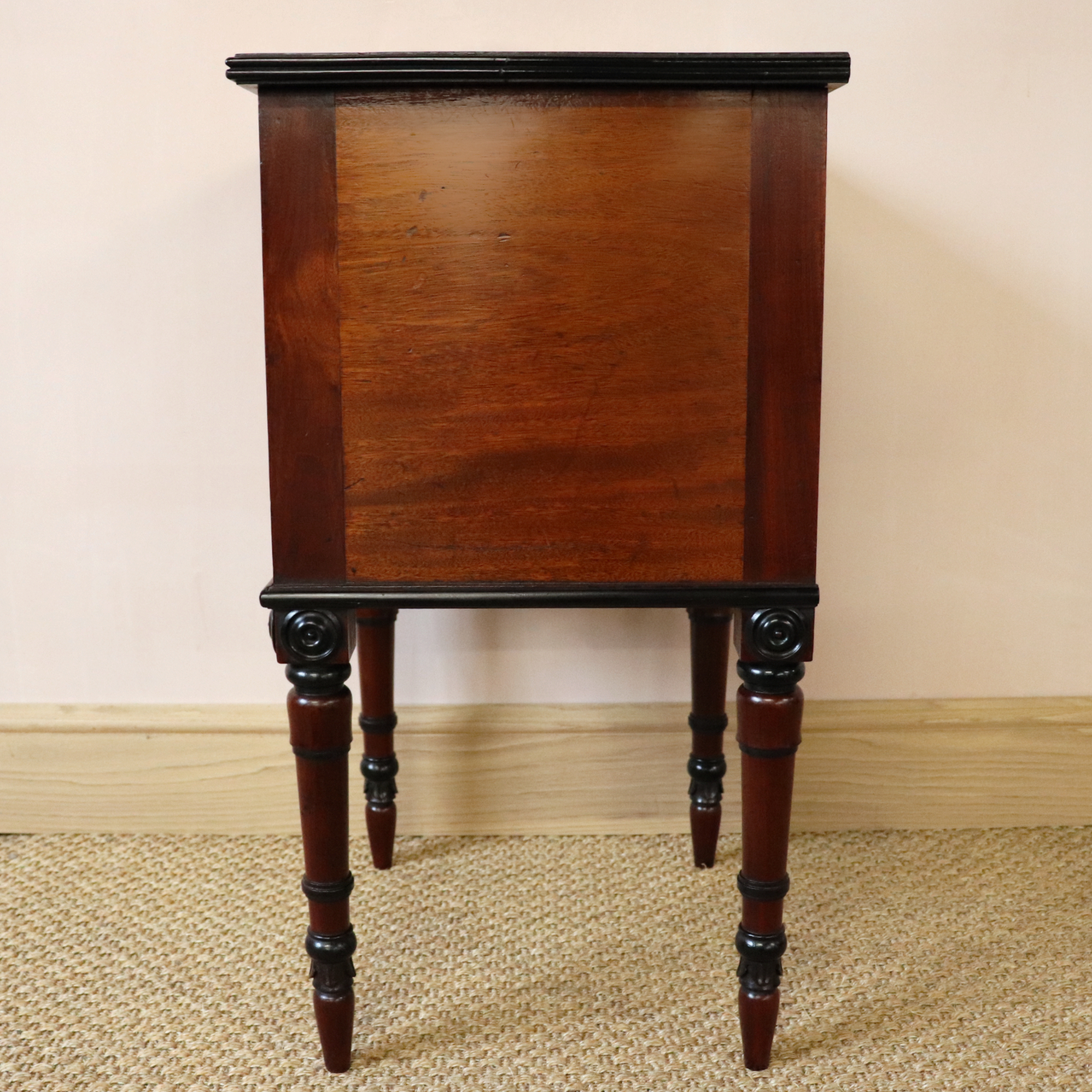
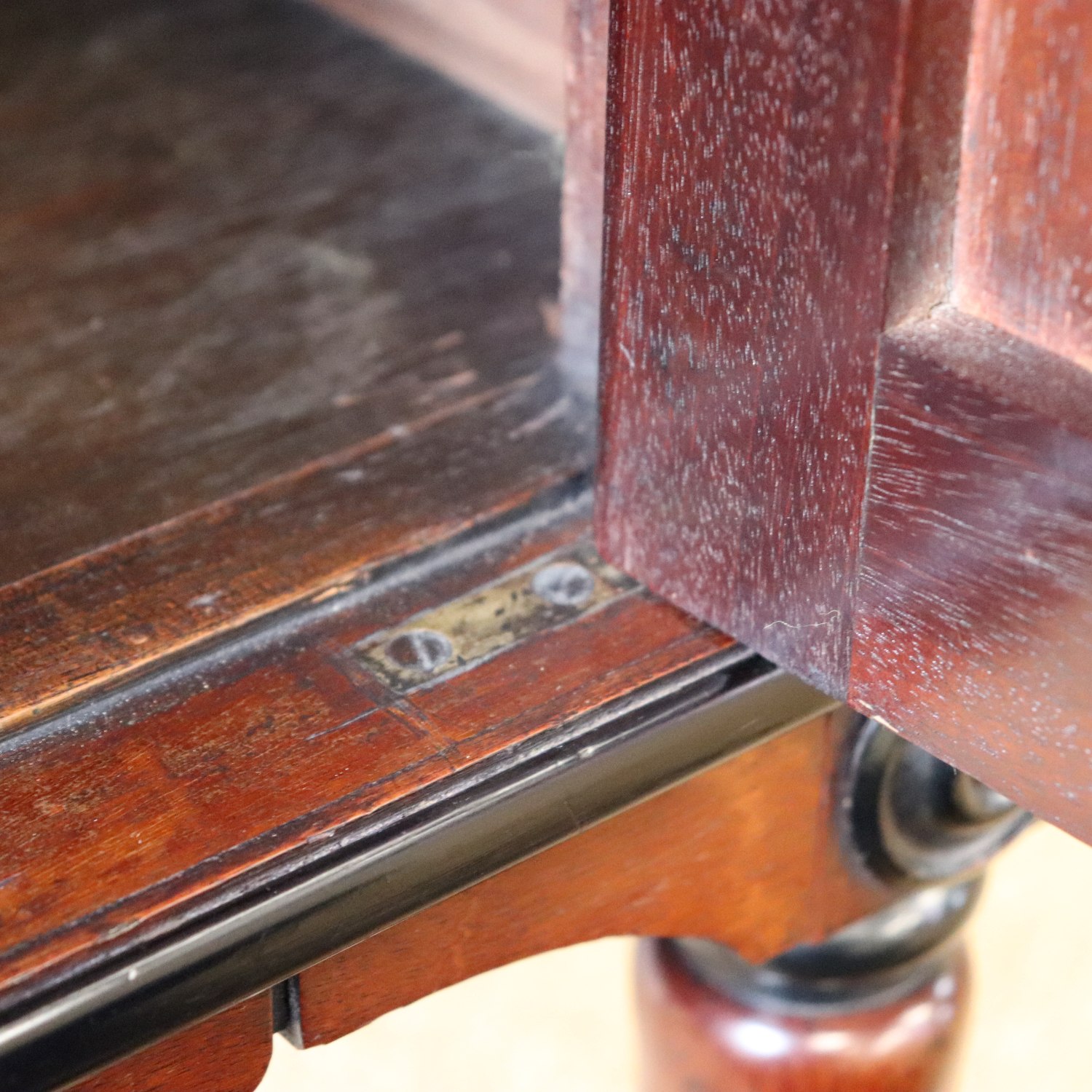
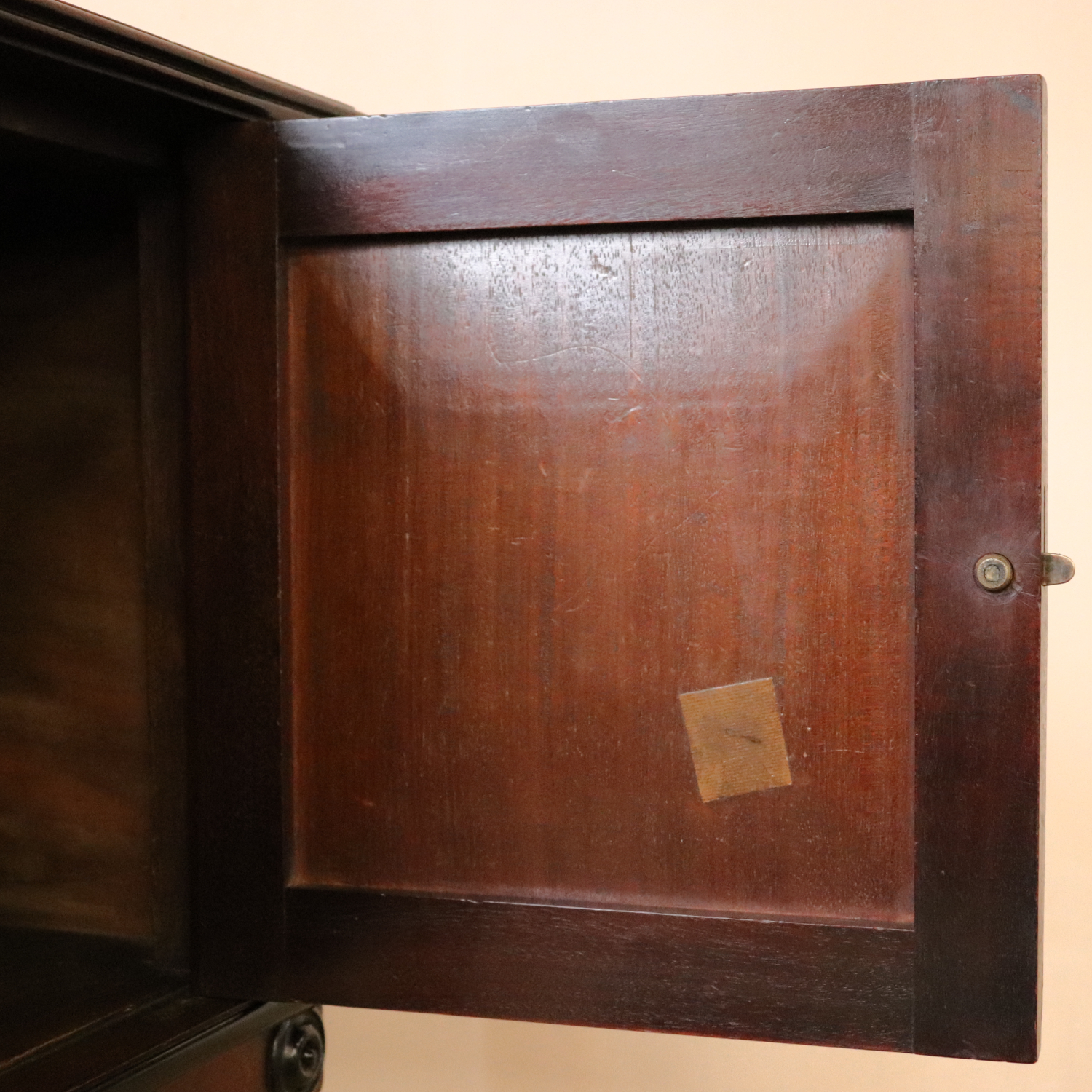
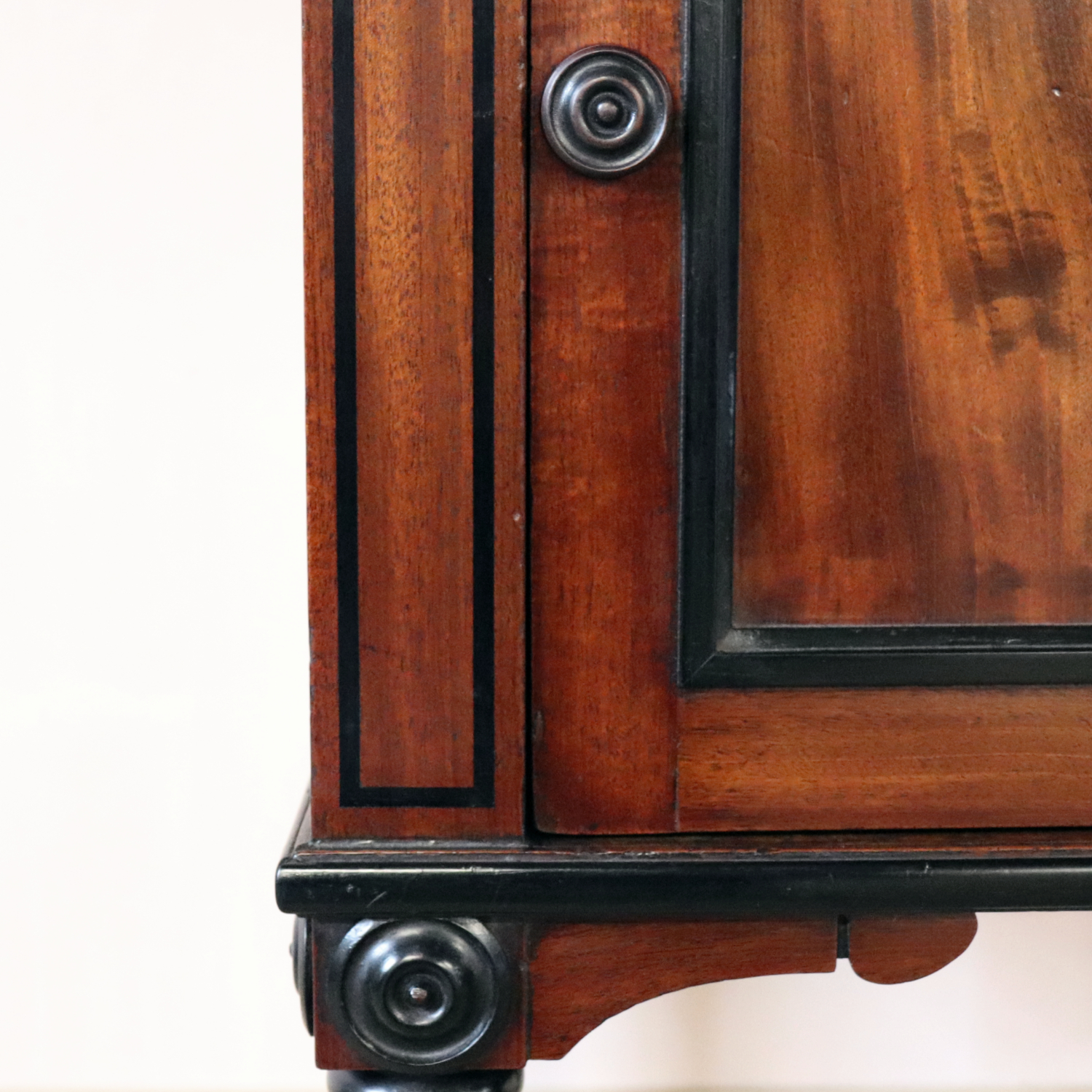
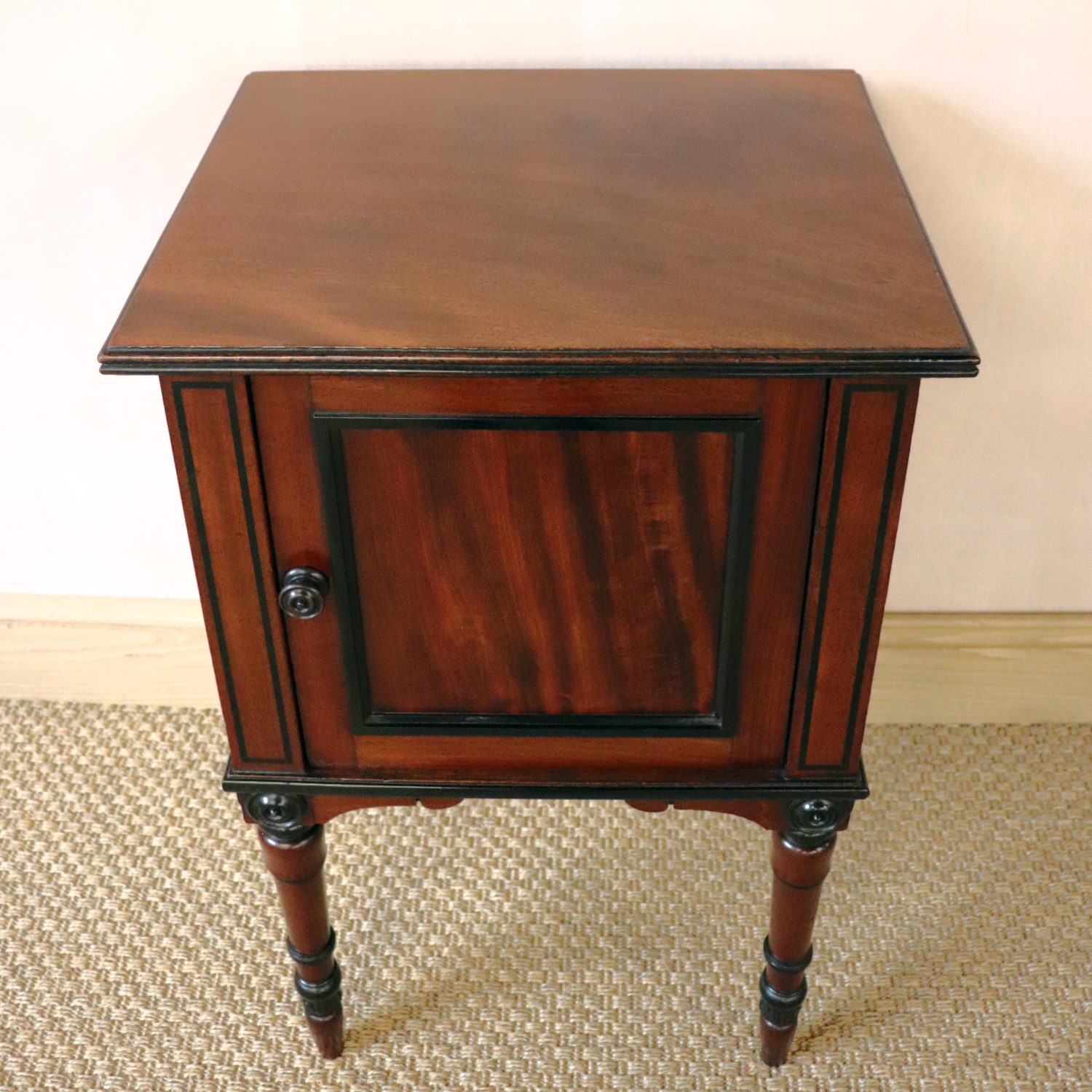
A rare and important Regency mahogany ‘bedside table’ by George Bullock, circa 1815, with ebony and ebonised mouldings and line inlays.
Dimensions: 75cm high, 49cm wide, 41cm deep
Provenance
Probably New Longwood, St. Helena, the exile home of Napoleon; Private Collection UK.
SKU:
Footnote
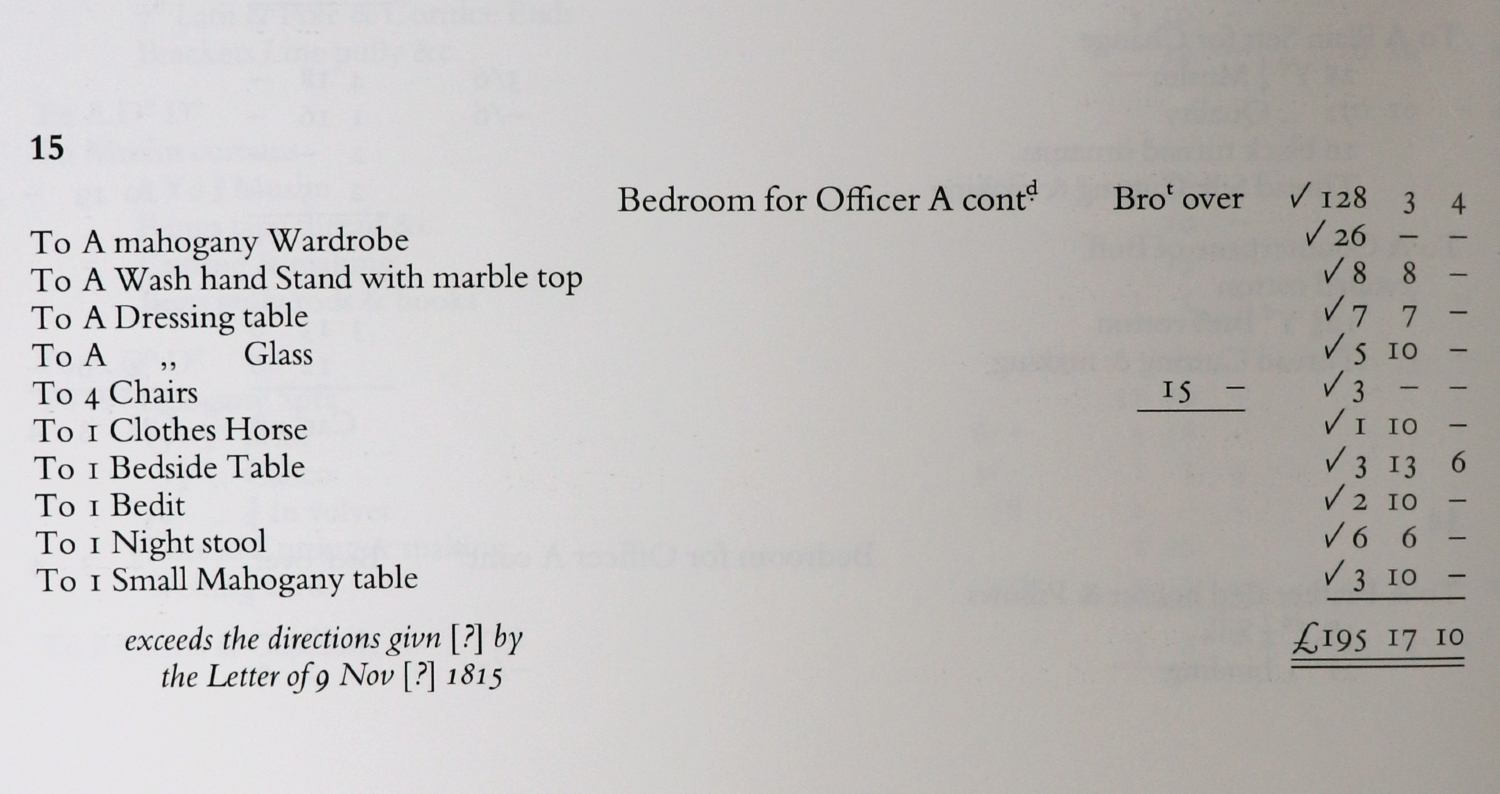
This bedside cupboard appears to be one of four ‘Bedside tables’ supplied by George Bullock for New Longwood, St. Helena as part of an extraordinarily lavish commission of Furniture and Furnishings by the British Government for Napoleon following his defeat at Waterloo. Probably ‘George Bullock’s Account for Furniture Supplied to St. Helena, 1816’ ‘1 Bedside table…£3 13s. 6d.’ each for one of the four Officers’ bedrooms.
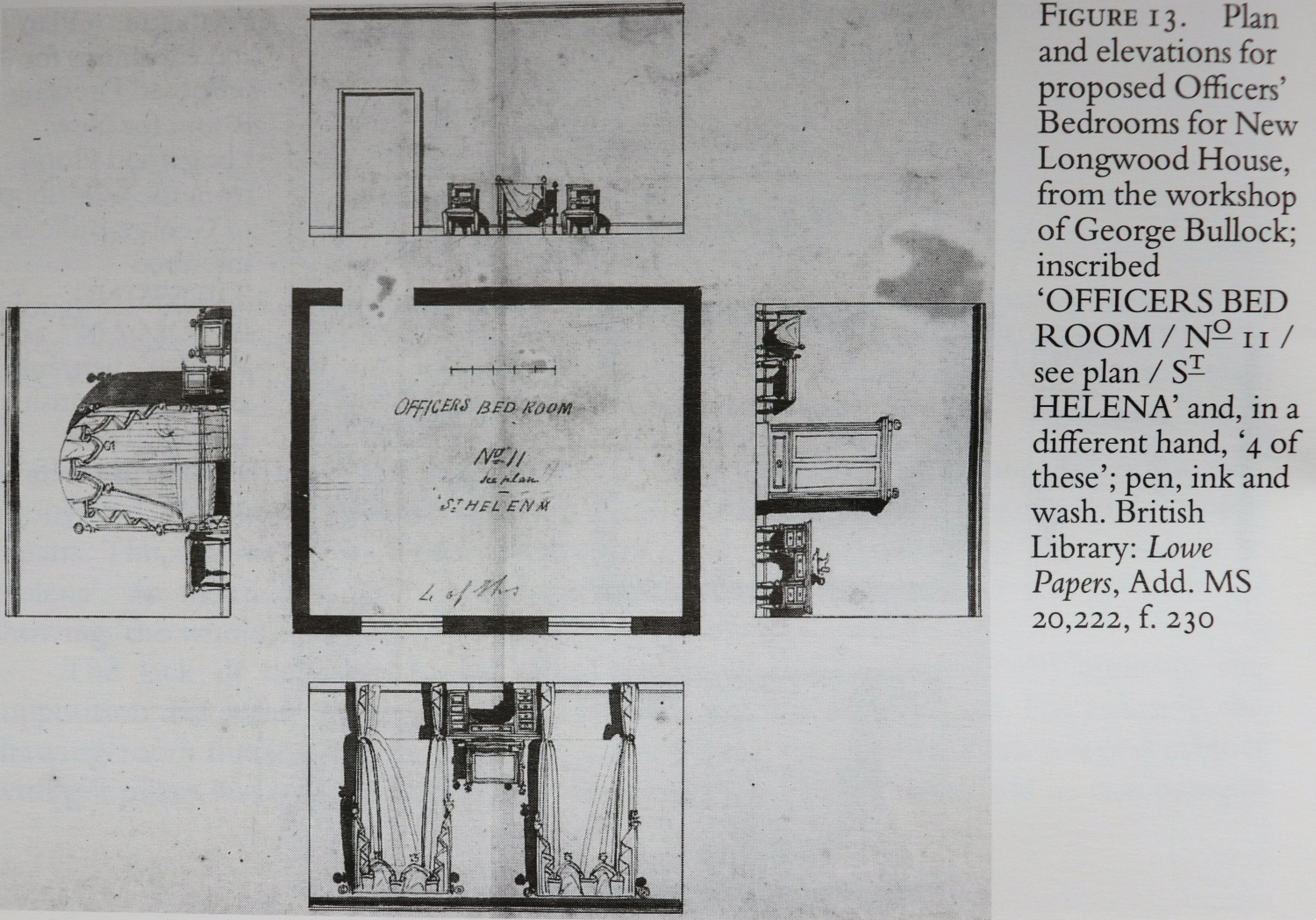
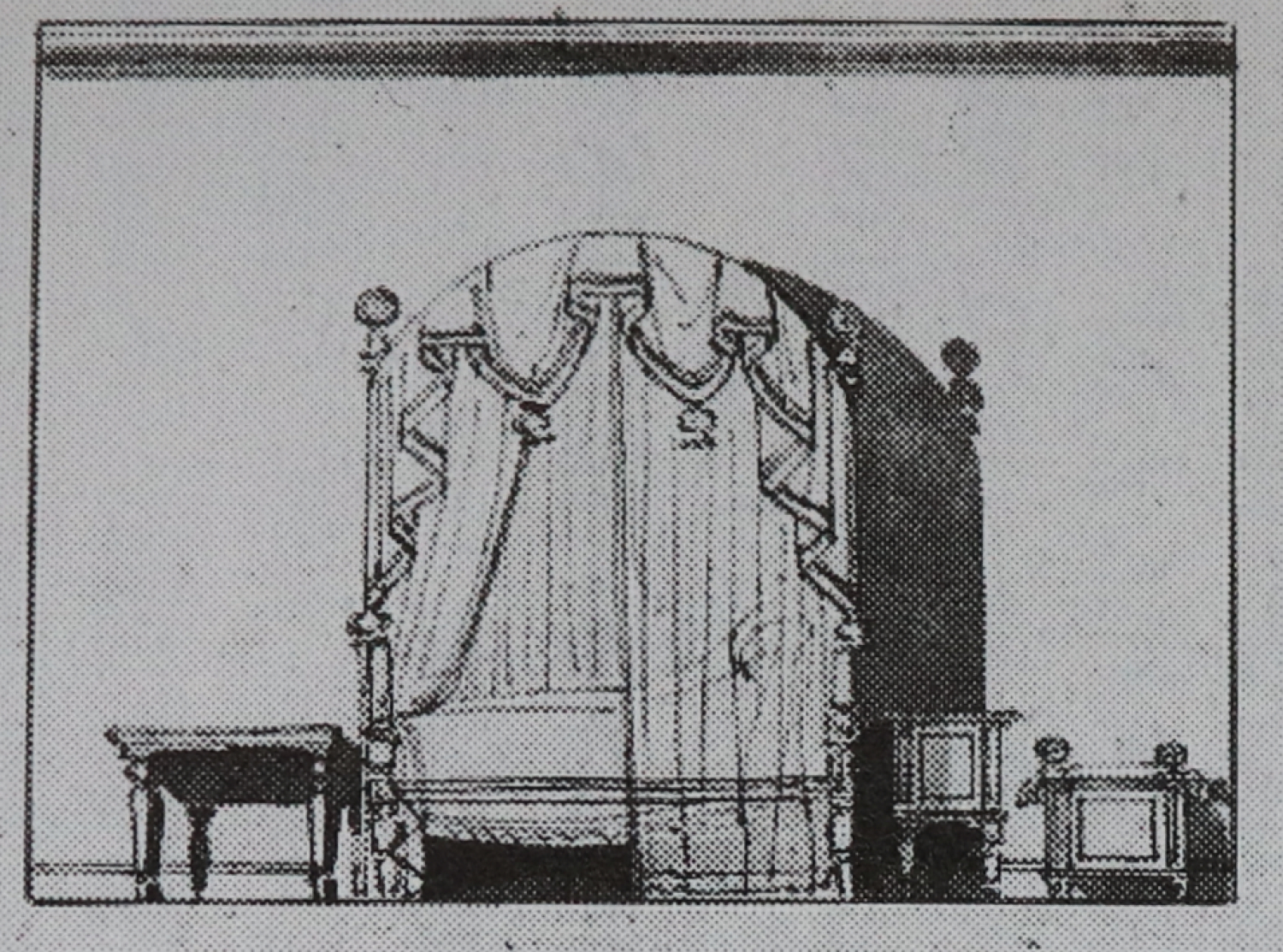
After Napoleon’s death, most of the contents of New Longwood House were offered for sale by auction over 10 days between April 1st and August 12th 1822.
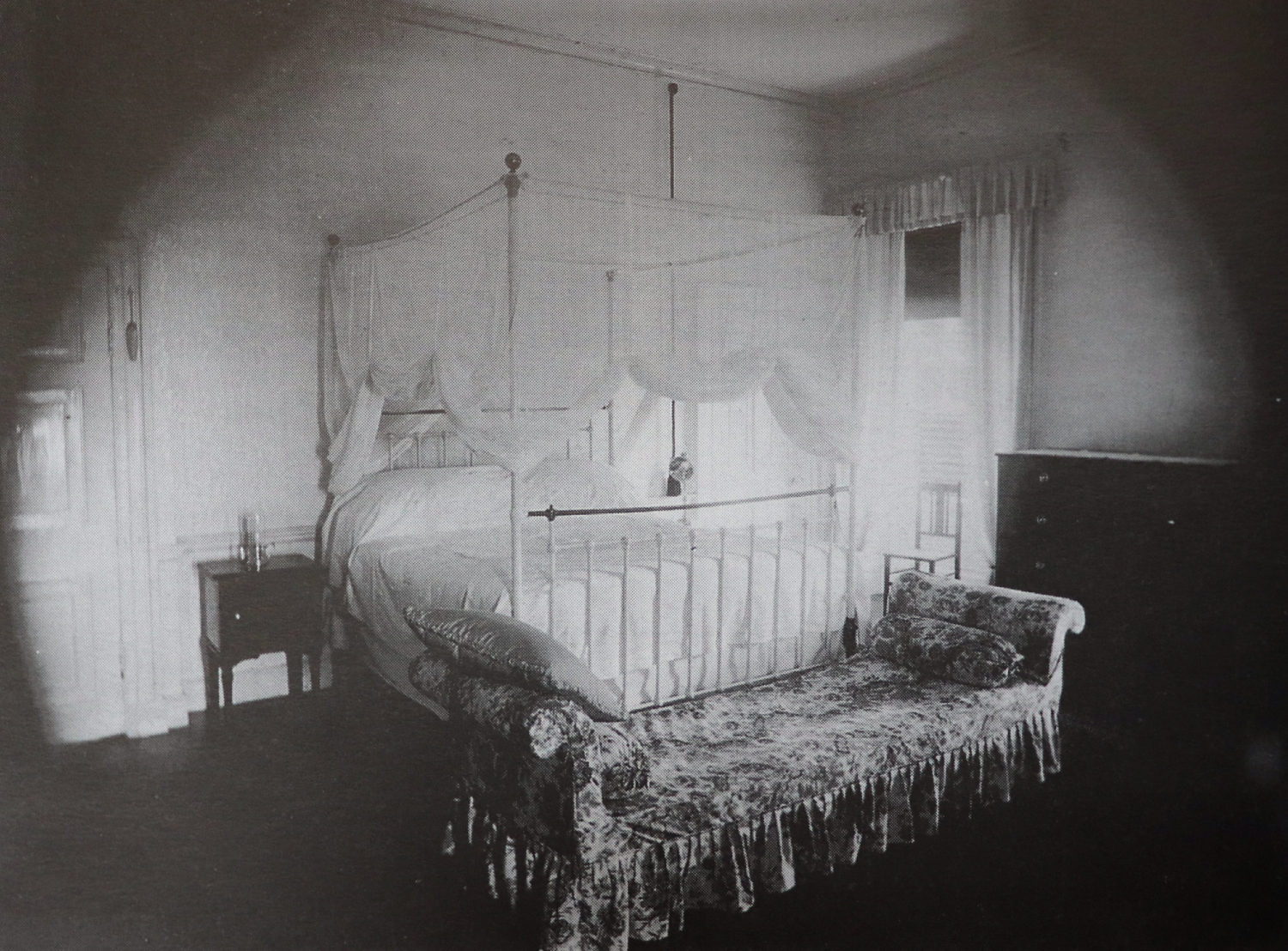
A seemingly identical bedside table was at Plantation House, St. Helena in the 1920s (see image of black and white photograph). Its ownership and location were unknown; it may be our bedside table…
Eleven bedside tables of similar design in oak and holly were supplied by George Bullock to Matthew Robinson Boulton for Tew Park in Oxfordshire in 1816-1818, as part of a supply of Furniture and Decorations to the value of £4400. Boulton’s bedroom furniture, which remained at Tew Park until 1987 when sold by Christie’s, included many simple oak and holly versions of mahogany models sent to St. Helena.

A mahogany and ebony side table ‘Napoleon’s Bedroom Table’, with matching idiosyncratic design features, was sold Christie’s London ‘Thomas Hope & The Neo-classical Vision’ 24th April 2008, £96,500 (see image of catalogue entry).

In 1815, Bullock was famed as being amongst London’s ‘most tasteful and ingenious artists’ and attracted a distinguished clientele including Sir Walter Scott, James Watt Junior and Matthew Boulton. His furnishings at New Longwood, designed to harmonise with the architecture ‘in the pure simplicity of the Grecian style’, executed by architect William Atkinson, were intended to provide an appropriate residence for the ‘Ex-Emperor’, whom the Prince Regent likened to ‘the modern Thermistocles’, the exiled Athenian statesman and Commander. ‘In the early 19th century, George Bullock’s Grecian furniture was elegant and refined almost to the point of minimalism’.
Bibliography: Levy (M.) Napoleon in Exile, 1998.
All of our items are also available through our Selling Antiques page.