
Arch of Constantine Plaque
Sold
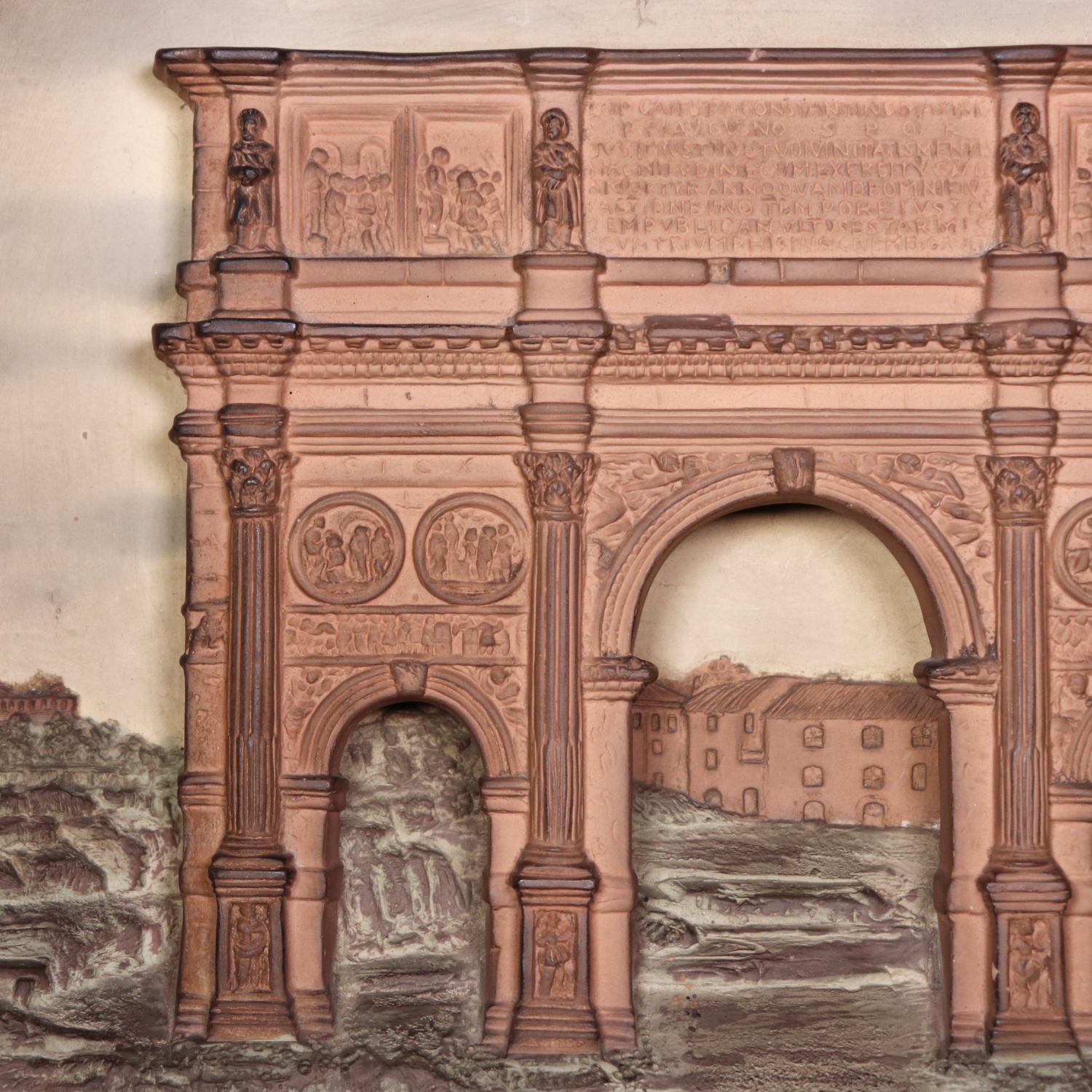
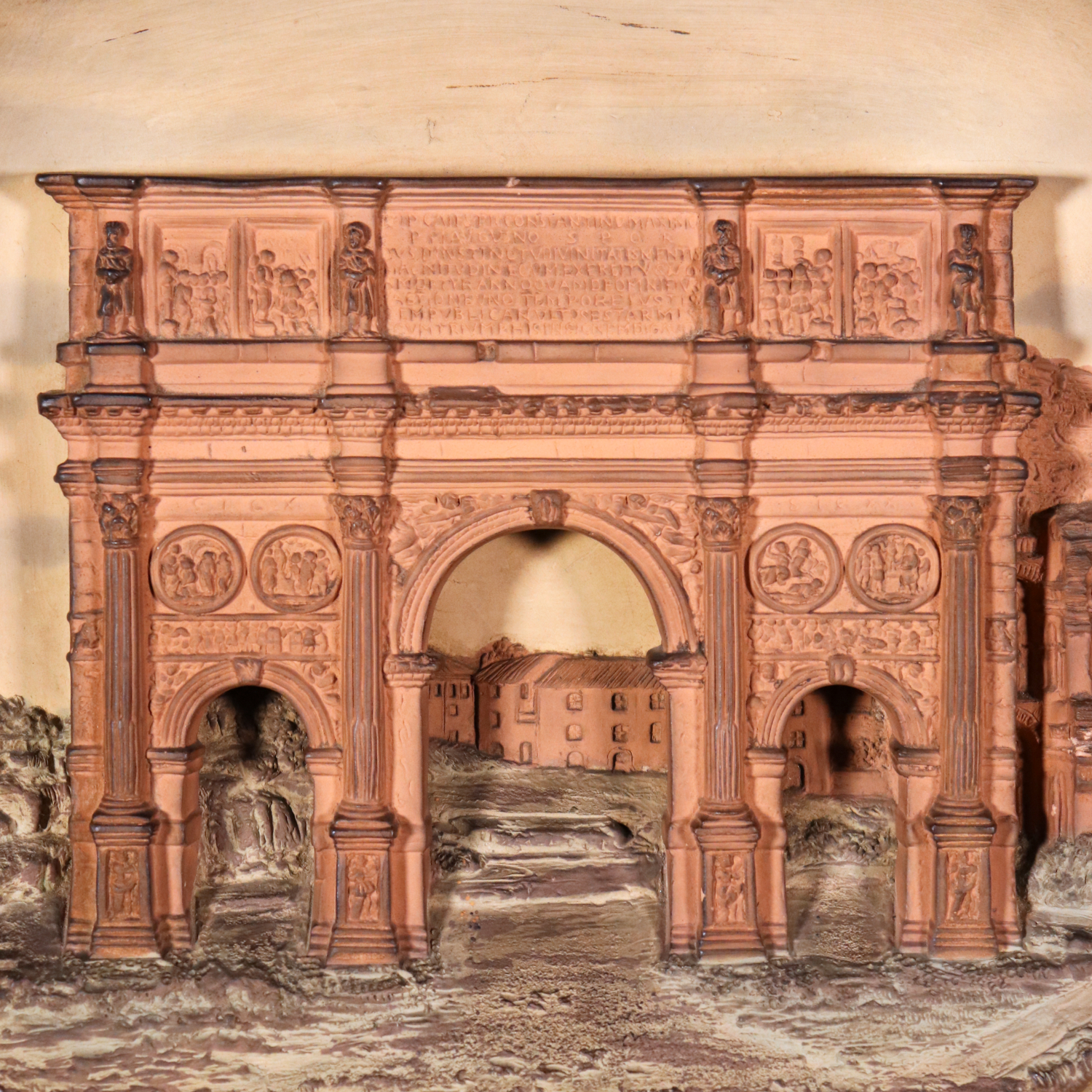
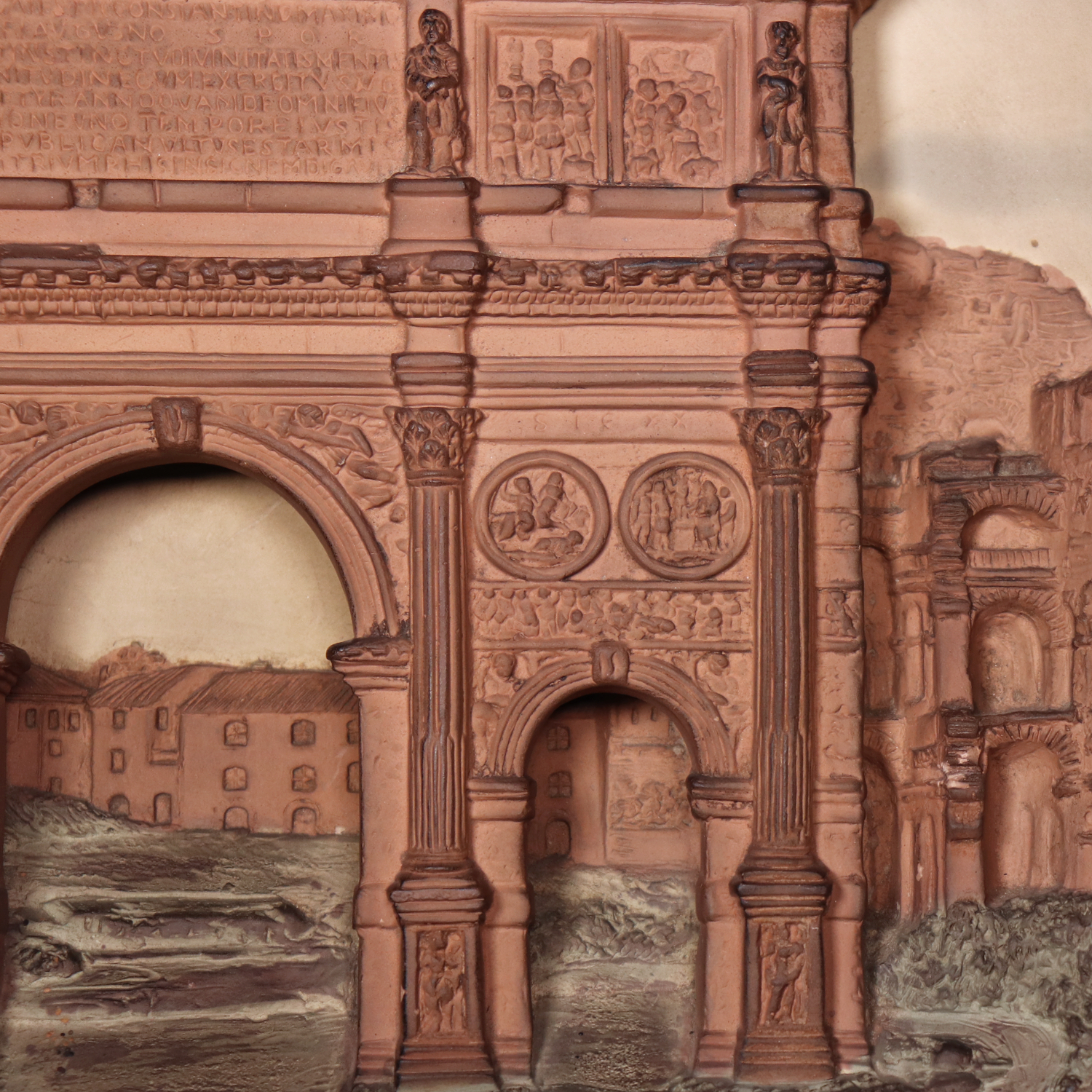
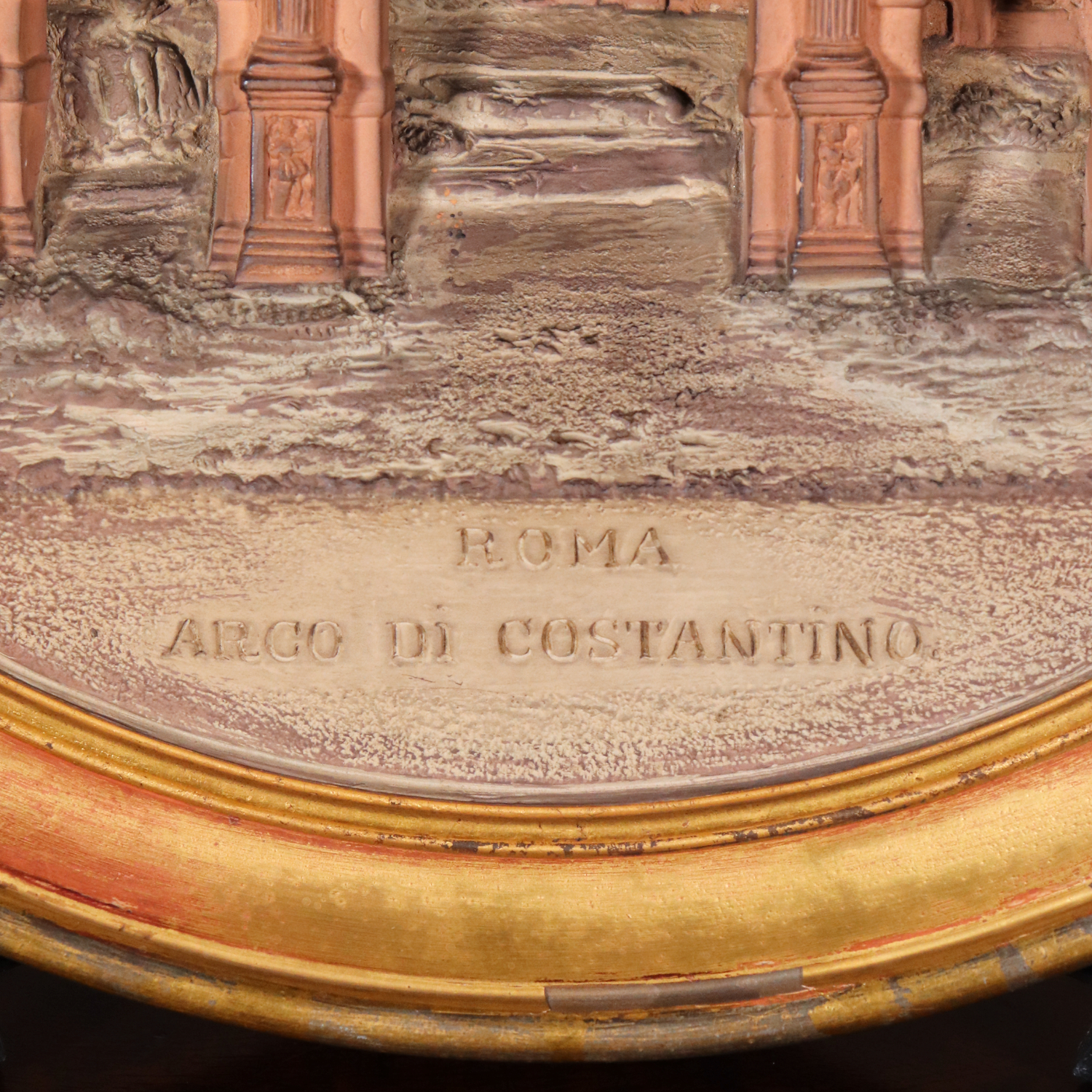
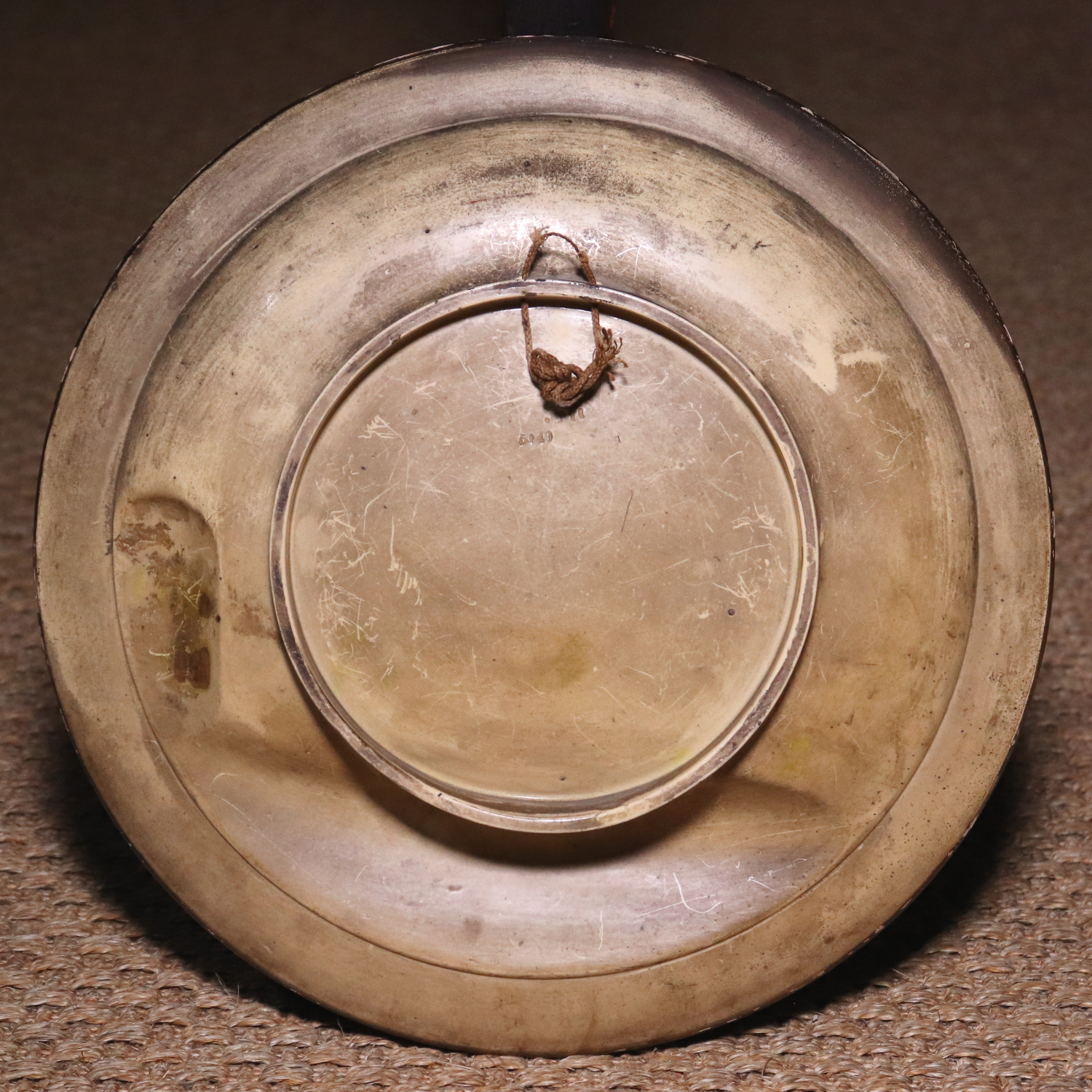
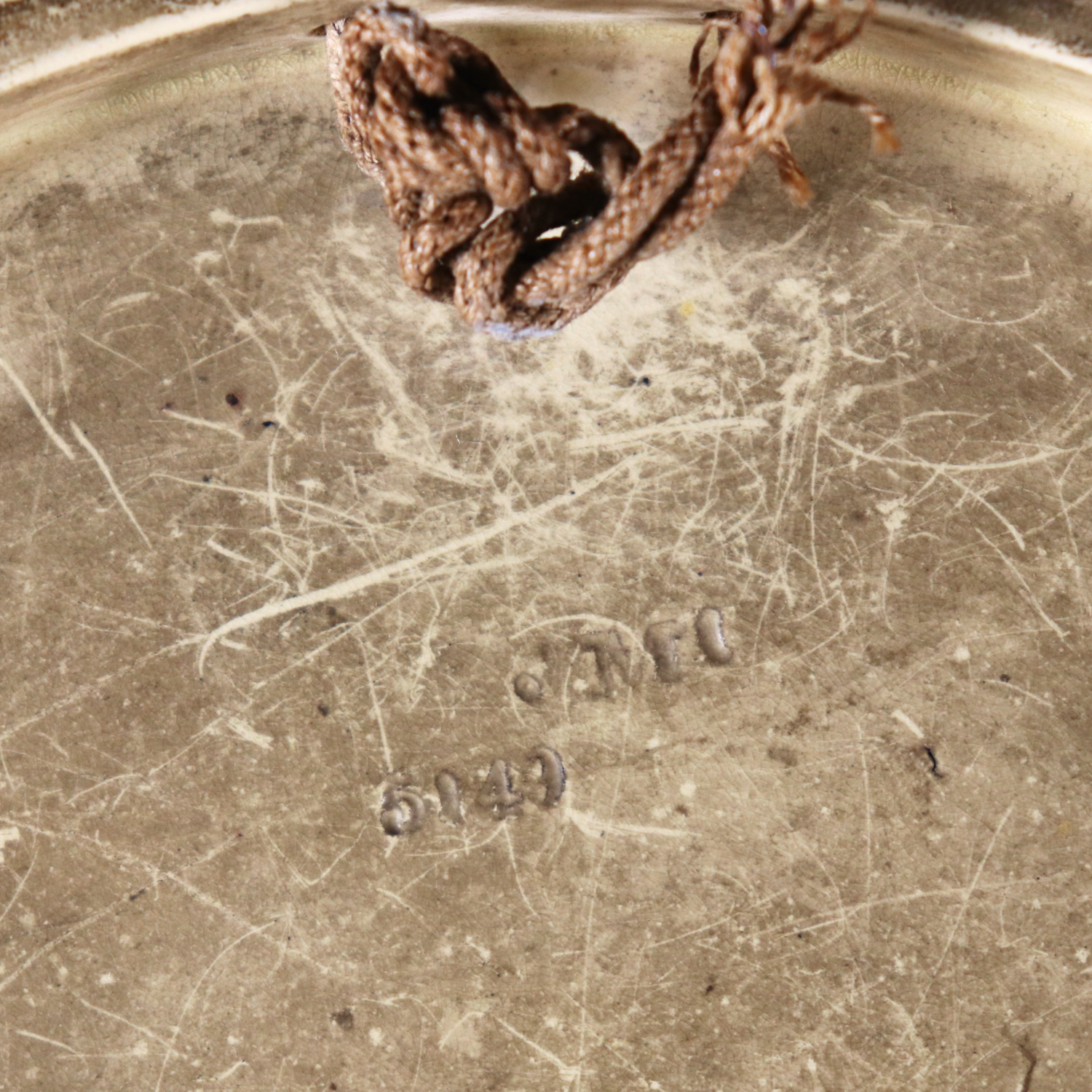
An unusual relief cast terracotta plaque of the Arch of Constantine, circa 1880, by Johann Maresch, incorporating a cast and gilded frame, stamped marks.
The Arch of Constantine is a triumphal arch in Rome dedicated to the emperor Constantine the Great. The arch was commissioned by the Roman Senate to commemorate Constantine’s victory over Maxentius at the Battle of the Milvian Bridge in AD 312. Situated between the Colosseum and the Palatine Hill, the arch spans the Via Triumphalis, the route taken by victorious military leaders when they entered the city in a triumphal procession. Dedicated in 315, it is the largest Roman triumphal arch.
SKU:
Dimensions: 32cm diameter, 5cm deep
All of our items are also available through our Selling Antiques page.
Footnote
The Grand Tour of the late 17th, 18th and 19th centuries saw many upper class, wealthy and aristocratic gentlemen travel to Italy and Europe, particularly Rome, Venice and Florence, for pleasure, education and inspiration. This afforded them the opportunity to view important classical and Renaissance works of art and architecture.
The term ‘Grand Tour’ was coined by the Catholic priest and travel writer Richard Lassels (circa 1603-68), who used it in his influential guidebook The Voyage of Italy, published in 1670, to describe young lords travelling abroad to learn about art, architecture and antiquity.
Robert Adam wrote of Rome in 1755, ‘Rome is the most glorious place in the universal world. A grandeur and tranquillity reigns in it, everywhere noble and striking remains of antiquity appear in it, which are so many that one who has spent a dozen years in seeing is still surprised with something new…’
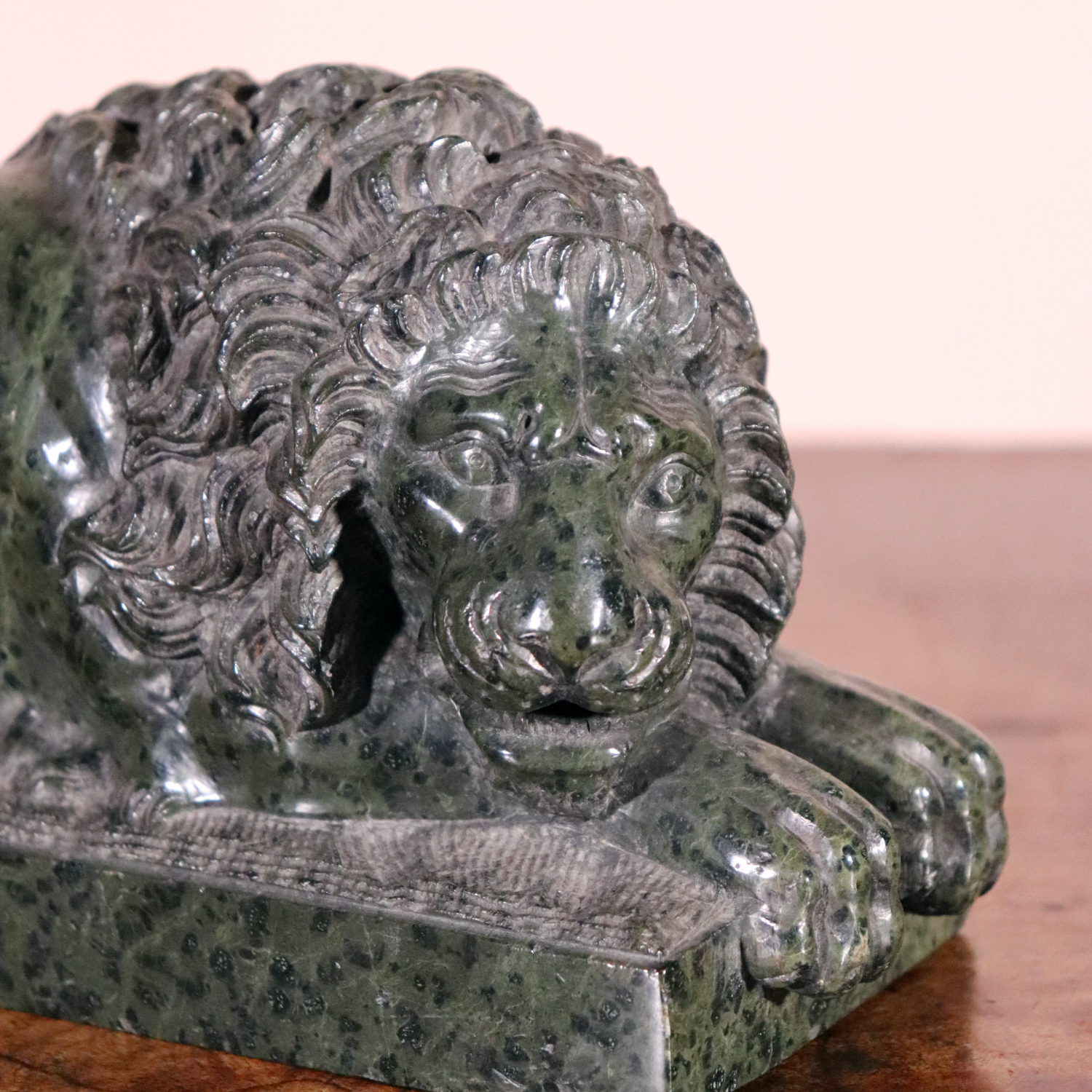
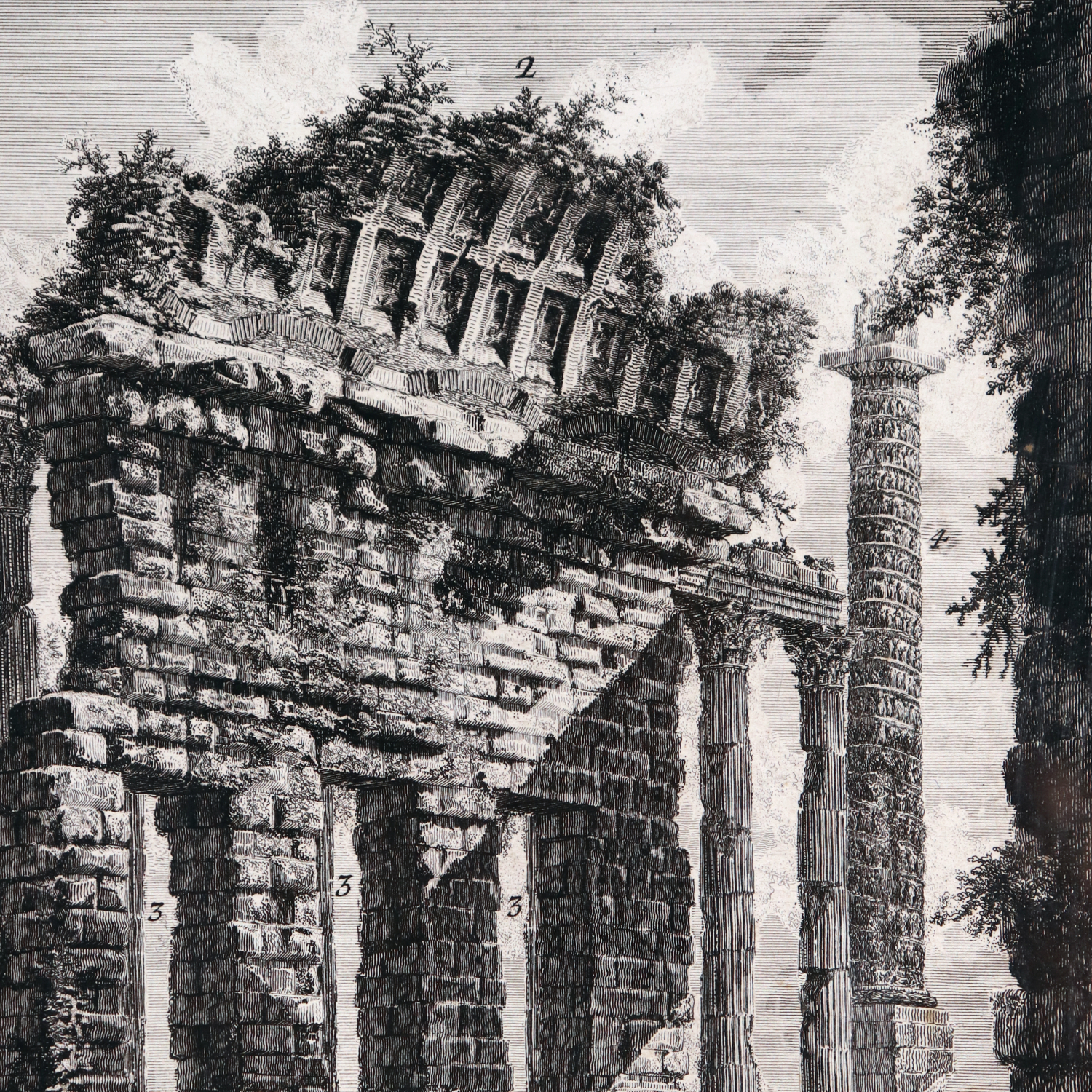
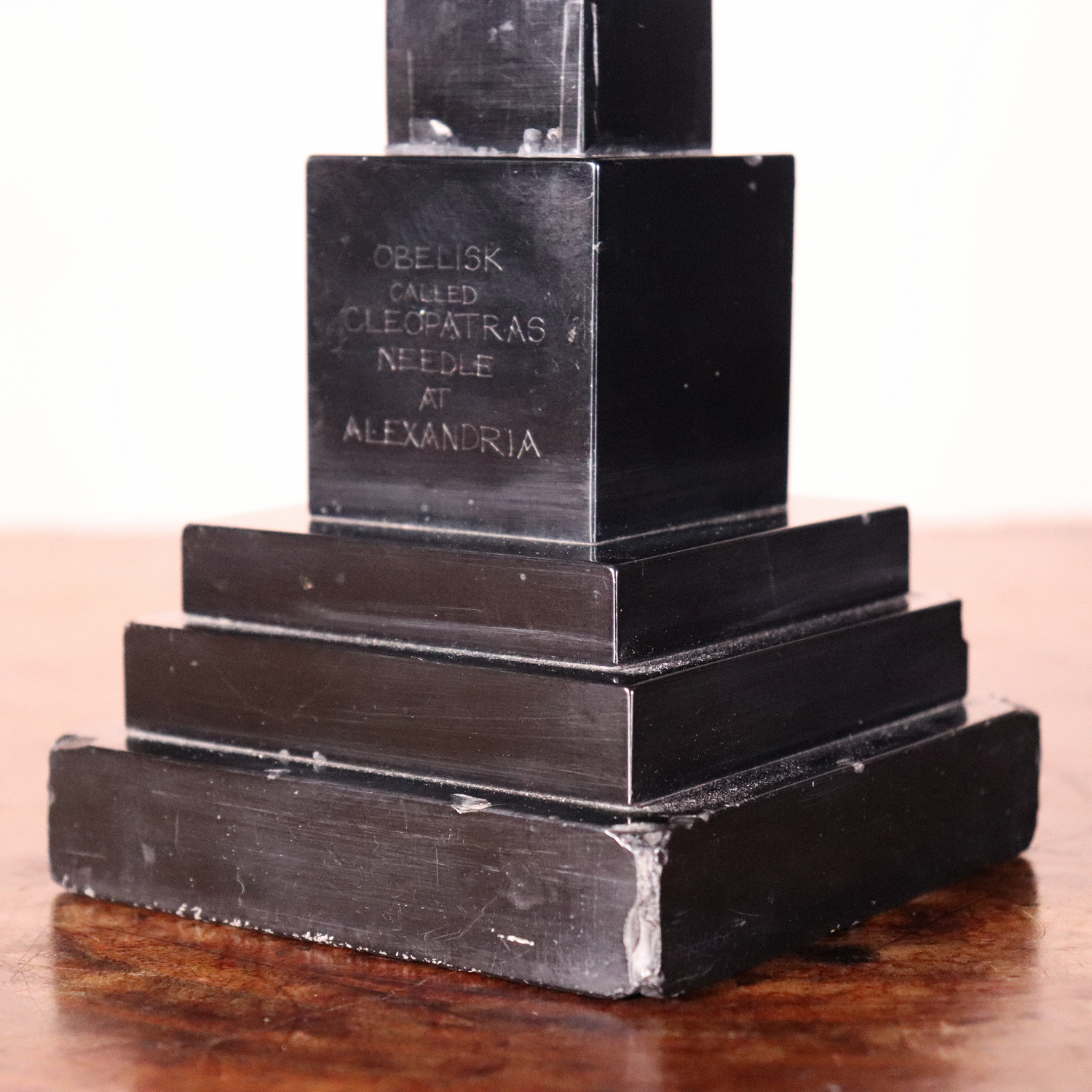
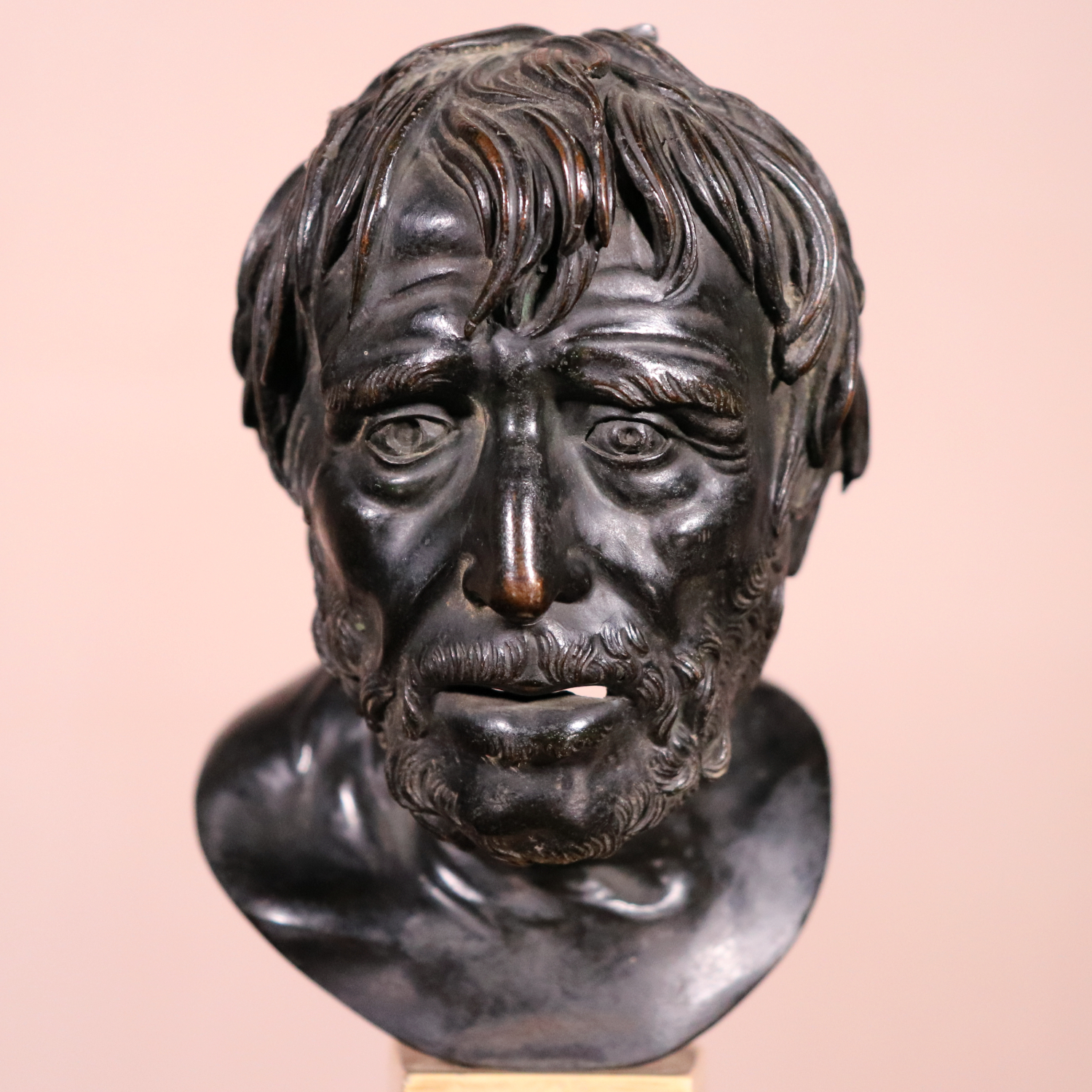
Many Grand tourists collected souvenirs in the form of bronze and marble models of sculpture and architecture, and formed collections of Grand Tour objects for their English country houses, most notably Chatsworth House.